Freight Transport: Types and When to Choose Them
Freight transport is the physical backbone of commerce. Raw materials move from extraction sites to factories. Components travel between production facilities. Finished goods cross borders, pass through distribution centers, and eventually reach stores, businesses, and consumers.
The movement itself may look straightforward. The decision behind it rarely is.
A logistics manager must consider distance, cargo characteristics, delivery deadlines, cost, infrastructure, regulations, risk, environmental impact, and available capacity. A shipment that is ideal for ocean freight may be completely unsuitable for air transport. A full truckload can be economical for one customer but wasteful for another. Rail may provide an excellent compromise between cost and speed, while inland waterways can be exceptionally efficient when geography permits.
Understanding the different types of freight transportation is therefore fundamental to designing an effective logistics network.
The objective is not simply to move goods from point A to point B. It is to select the transportation method that provides the best combination of reliability, cost, speed, capacity, and risk for a particular shipment.
What Is Freight Transport?
Freight transport refers to the movement of goods, materials, products, and commodities from one location to another.
It can involve a single transportation mode or several modes working together.
For example, a product manufactured in Asia might travel by truck to a port, by container ship across an ocean, by rail to an inland distribution hub, and finally by truck to the customer.
This is where freight transport logistics becomes important.
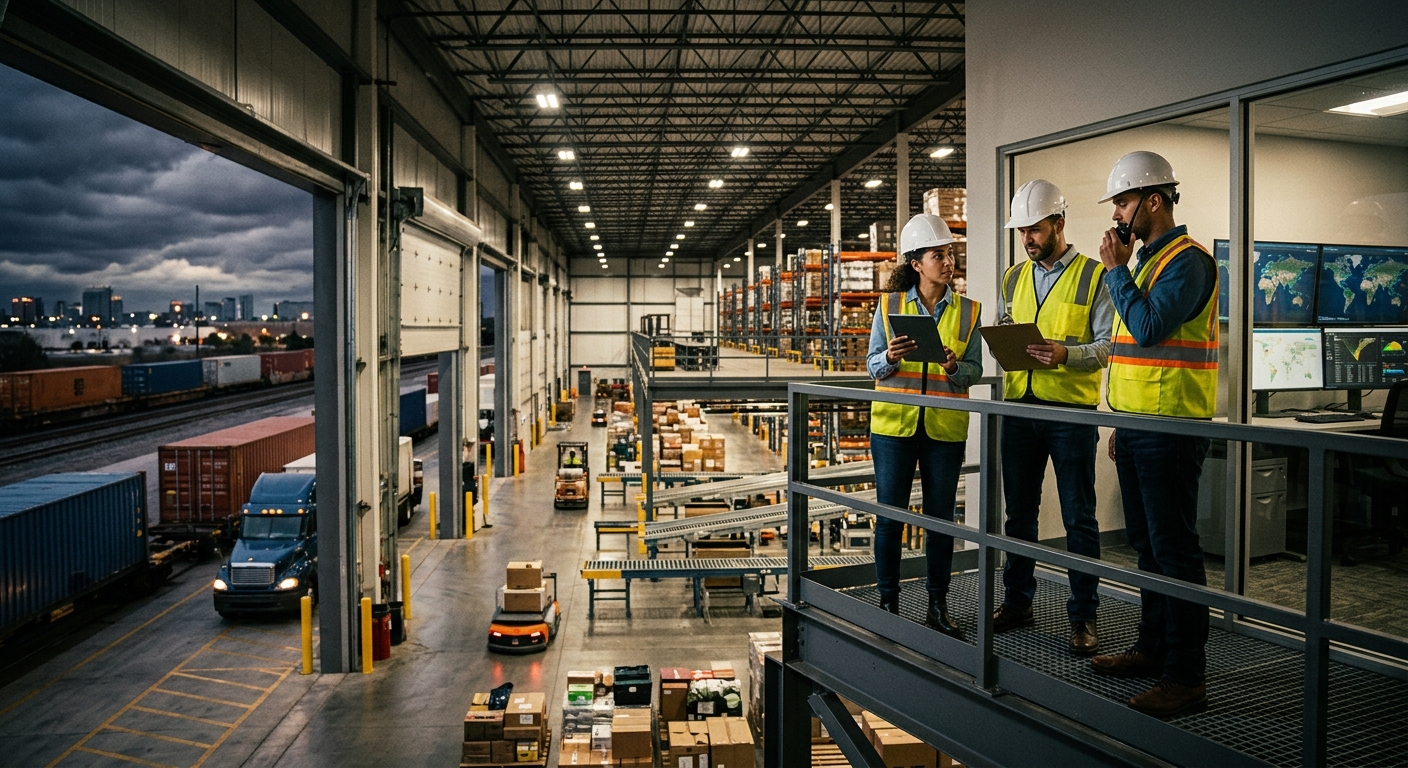
Freight transportation is not an isolated activity. It is part of a broader logistical system involving inventory, warehousing, order processing, customs, documentation, loading, unloading, and delivery.
A transportation decision can therefore influence the entire supply chain.
The Main Types of Freight Transport
There are four principal modes of freight transportation:
- Road
- Rail
- Maritime
- Air
In addition, inland waterways and multimodal transportation can play important roles in specific markets.
Each mode has a distinctive combination of strengths and limitations.
1. Road Freight Transport
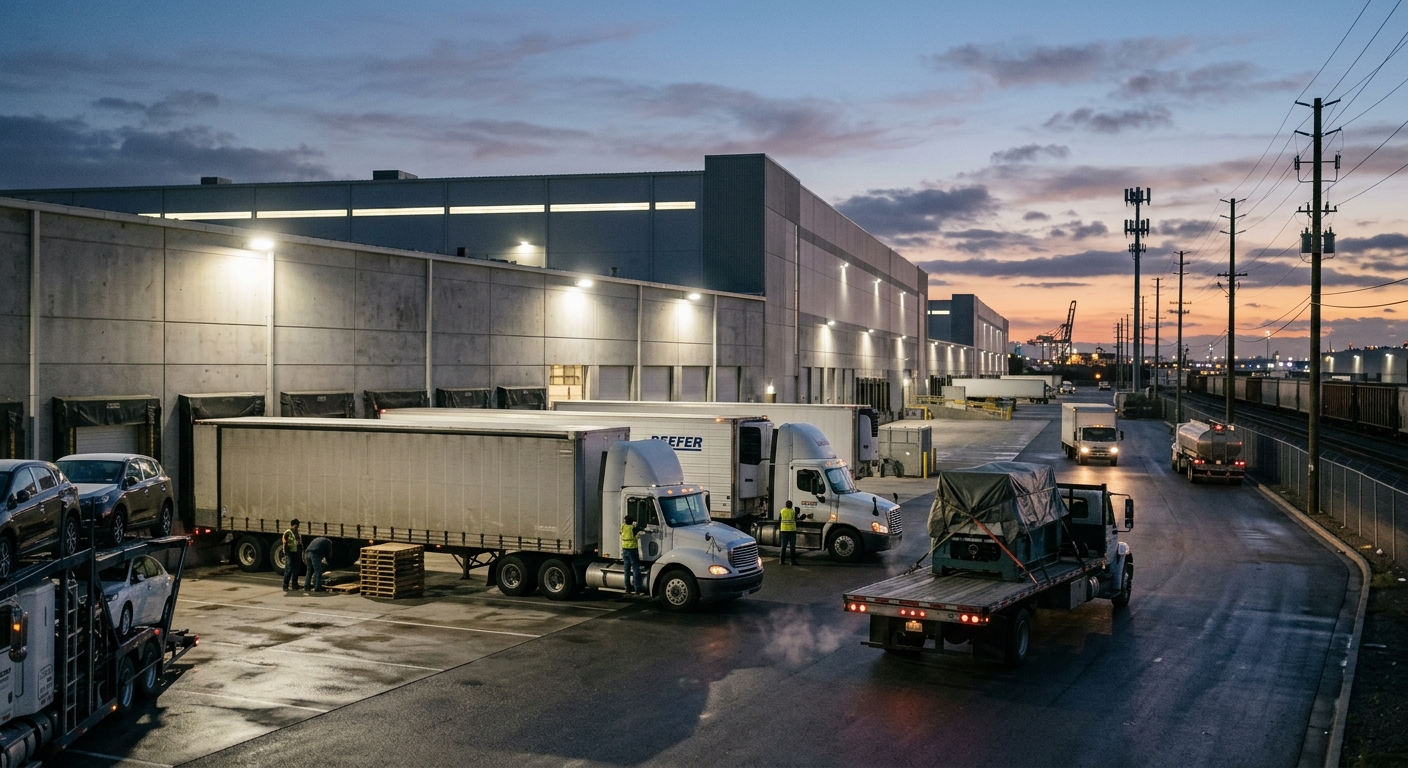
Road transportation is one of the most flexible forms of freight movement.
Trucks can reach factories, warehouses, retail locations, construction sites, ports, and customer premises without requiring the shipment to be transferred to another mode.
This flexibility makes road transport indispensable for short and medium-distance distribution.
Common road freight equipment includes:
- Box trucks
- Flatbed trucks
- Refrigerated trucks
- Tanker trucks
- Curtain-sided trailers
- Container chassis
- Specialized heavy-haul vehicles
Road freight is particularly effective when delivery flexibility matters.
When Should Road Freight Be Used?
Road transport is often appropriate when:
- The destination has direct road access
- Delivery requires high flexibility
- Shipment distances are relatively short or moderate
- Door-to-door delivery is important
- Cargo requires frequent stops
- Delivery schedules need to be highly adaptable
Road freight is also frequently used as the first and final leg of longer transportation journeys.
A container may travel thousands of kilometers by ship, but trucks usually handle the movement between the port, warehouse, and final destination.
Advantages of Road Freight
The principal advantage is accessibility.
A truck does not need a port, airport, or railway terminal at the destination.
Road freight also provides relatively straightforward scheduling and routing.
It is particularly useful for distribution networks with numerous destinations.
Limitations of Road Freight
Road transport is vulnerable to:
- Traffic congestion
- Fuel-price volatility
- Driver shortages
- Road restrictions
- Weather conditions
- Infrastructure limitations
For very long distances, road transportation can also become less economical than rail or maritime alternatives.
2. Rail Freight Transport
Rail transportation is particularly effective for moving large quantities of freight over long distances.
Trains can transport substantial volumes of commodities and manufactured goods while generally requiring less energy per unit of cargo than road transportation.
Typical rail freight includes:
- Minerals
- Coal
- Grain
- Chemicals
- Automotive components
- Steel
- Containers
- Construction materials
Rail is particularly important in countries with extensive railway infrastructure.
When Should Rail Freight Be Used?
Rail can be a strong choice when:
- Cargo volumes are high
- Distances are long
- Delivery schedules are relatively predictable
- Rail infrastructure is readily available
- Cost efficiency is more important than maximum speed
- Cargo is suitable for bulk or containerized movement
For example, transporting large quantities of raw materials overland may be considerably more efficient by rail than by truck.
Advantages of Rail
Rail can offer:
- High capacity
- Competitive long-distance economics
- Relatively consistent transit times
- Lower energy consumption per tonne-kilometer
- Efficient movement of heavy cargo
Rail is particularly useful for high-volume freight flows.
Limitations of Rail
Rail lacks the door-to-door flexibility of trucks.
Cargo generally needs to be transported to and from rail terminals by road.
This creates additional handling and coordination.
Rail networks can also be constrained by infrastructure, scheduling, congestion, and geographic availability.
For this reason, rail and road often work together rather than compete directly.
3. Maritime Freight Transport
Maritime transportation is fundamental to international commerce.
Ocean-going vessels can carry enormous quantities of cargo across continents.
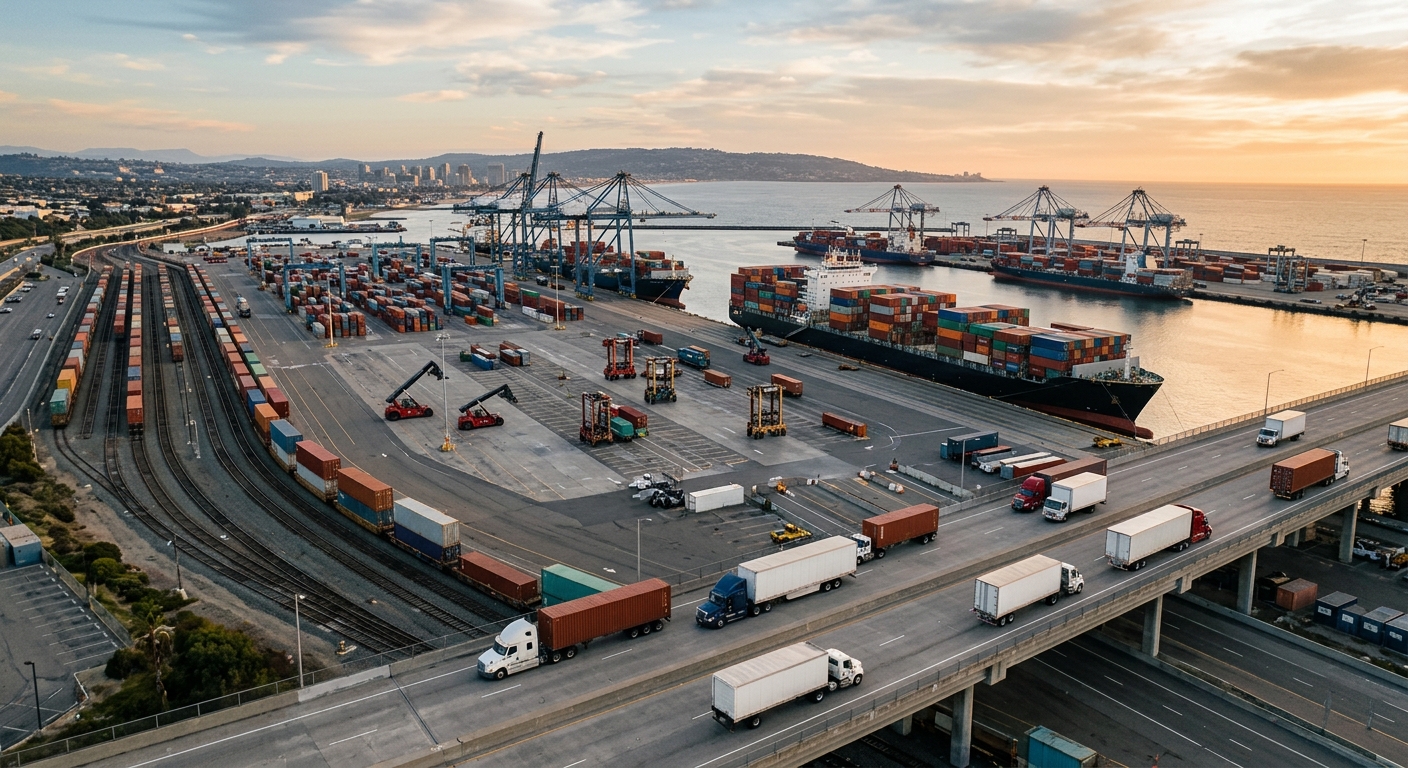
Container shipping has transformed global trade by standardizing cargo units and simplifying transfers between ships, trucks, and trains.
Common maritime cargo includes:
- Consumer goods
- Machinery
- Vehicles
- Raw materials
- Agricultural commodities
- Chemicals
- Industrial components
When Should Maritime Freight Be Used?
Ocean freight is generally appropriate when:
- Shipment volumes are large
- International distances are substantial
- Transit time is not extremely urgent
- Cost efficiency is important
- Cargo can tolerate longer transit periods
For many international shipments, maritime transport offers the most economical method of moving large quantities over long distances.
Advantages of Maritime Transport
Its primary strength is capacity.
A large container vessel can transport enormous volumes in a single voyage.
Ocean freight can therefore provide substantial economies of scale.
It is particularly suitable for standardized containerized cargo.
Limitations of Maritime Freight
The principal disadvantage is speed.
Ocean transportation is considerably slower than air freight.
Other limitations include:
- Port congestion
- Weather disruption
- Customs requirements
- Vessel schedules
- Longer lead times
- Complex international documentation
For time-sensitive goods, these constraints can be decisive.
4. Air Freight Transport
Air freight occupies the opposite end of the transportation spectrum.
It is exceptionally fast compared with maritime transport and can connect distant markets within a relatively short period.
However, speed comes at a premium.
Air freight is generally more expensive and offers less capacity than maritime transportation.
Typical air-freight products include:
- Pharmaceuticals
- Electronics
- High-value components
- Perishable products
- Urgent spare parts
- Time-sensitive documents
- Fashion products
When Should Air Freight Be Used?
Air freight makes sense when:
- Delivery is urgent
- Cargo has high value relative to weight
- Product shortages are expensive
- Goods are highly time-sensitive
- Inventory carrying costs are significant
- Long maritime transit times are unacceptable
Consider an aircraft component required to prevent an expensive industrial shutdown.
The transportation cost may be substantial.
Yet the cost of waiting several weeks for ocean freight could be much higher.
This is why transportation decisions must consider total economic consequences rather than freight rates alone.
5. Inland Waterway Transport
Inland waterways can be highly effective where navigable rivers and canals provide suitable infrastructure.
Barges can carry substantial quantities of bulk goods.
Typical cargo includes:
- Grain
- Minerals
- Construction materials
- Petroleum products
- Industrial commodities
Waterway transport can be relatively energy-efficient, but its usefulness is geographically constrained.
It depends entirely on navigable waterways and appropriate terminals.
Understanding the Different Freight Types
Transportation decisions also depend on the nature of the cargo.
There are several important freight types.
These include:
- General cargo
- Bulk cargo
- Liquid cargo
- Perishable cargo
- Hazardous cargo
- Oversized cargo
- High-value cargo
- Temperature-controlled cargo
Each creates different logistical requirements.
General Cargo
General cargo consists of packaged goods that do not require specialized handling.
Examples include:
- Furniture
- Consumer products
- Clothing
- Machinery
- Packaged food
- Household goods
General cargo is often transported in boxes, pallets, cartons, or containers.
Because it is relatively standardized, it can move through several transportation modes.
Bulk Freight
Bulk freight consists of unpackaged materials transported in large quantities.
Examples include:
- Grain
- Coal
- Sand
- Cement
- Ore
Bulk goods often require specialized equipment such as hopper railcars, bulk vessels, silos, or pneumatic systems.
Transportation mode is strongly influenced by volume.
Rail and maritime transport can be particularly efficient for large bulk shipments.
Liquid Freight
Liquid freight includes products such as:
- Fuel
- Chemicals
- Oils
- Certain food products
These products may require tanks, specialized containers, or tanker vehicles.
Safety becomes particularly important when liquids are hazardous or chemically reactive.
Perishable Freight
Perishable products deteriorate over time.
Examples include:
- Fresh produce
- Meat
- Seafood
- Dairy products
- Flowers
- Certain pharmaceuticals
Temperature control can be essential.
This is why refrigerated transportation—often called reefer transport—is widely used for temperature-sensitive cargo.
Speed also becomes important.
A shipment may technically survive a long journey, but quality can deteriorate during extended transit.
Hazardous Freight
Hazardous goods require specialized handling because they may pose risks to people, property, or the environment.
Examples can include:
- Flammable substances
- Corrosive chemicals
- Certain gases
- Explosive materials
- Toxic substances
Transportation is subject to strict regulations.
Documentation, packaging, labeling, vehicle requirements, route restrictions, and driver training may all be relevant.
The cheapest transportation option is rarely the most important consideration.
Safety and regulatory compliance come first.
Oversized and Heavy Freight
Some products cannot be transported using standard equipment.
Examples include:
- Industrial turbines
- Construction machinery
- Wind-energy components
- Large generators
- Heavy engineering equipment
These shipments may require specialized trailers, cranes, route surveys, permits, and escorts.
Transportation planning can begin long before the cargo is physically moved.
Bridge capacities, road widths, turning radii, overhead clearances, and infrastructure restrictions may all need to be assessed.
High-Value Freight
High-value cargo introduces another variable: security.
Examples include:
- Electronics
- Luxury products
- Specialized machinery
- Precious materials
- Certain pharmaceuticals
For these goods, logistics managers must consider theft risk, insurance, tracking, secure facilities, and transportation reliability.
A cheaper freight rate may not represent a genuine saving if it increases exposure to loss.
Choosing the Right Mode of Transportation
Selecting among the types of freight transportation requires more than comparing prices.
Several variables should be evaluated simultaneously.
1. Transit Time
How quickly must the shipment arrive?
Urgent cargo favors air or road transportation.
Less time-sensitive cargo can often use maritime or rail transport.
2. Cost
Freight rates matter, but they are only one component of transportation economics.
The total cost can include:
- Freight
- Handling
- Insurance
- Warehousing
- Customs
- Inventory carrying costs
- Fuel surcharges
- Packaging
- Delays
3. Cargo Characteristics
The physical characteristics of the goods influence transportation options.
Is the cargo:
- Heavy?
- Fragile?
- Perishable?
- Hazardous?
- Oversized?
- High value?
- Temperature-sensitive?
The cargo itself often determines which modes are viable.
4. Distance
Short-distance shipments generally favor road transport.
Long international shipments often favor maritime transportation.
Long overland routes may make rail attractive.
Distance, however, should always be considered alongside infrastructure.
5. Reliability
A low-cost mode that routinely misses delivery commitments may create higher total costs.
Reliability is particularly important for:
- Production components
- Perishable goods
- Retail replenishment
- Emergency shipments
Multimodal Freight Transport
Many logistics networks use more than one transportation mode.
This is known as multimodal transportation.
A shipment might follow this sequence:
Truck → Rail → Ship → Truck
Each mode performs the part of the journey for which it is most appropriate.
For example:
A truck collects goods from a factory.
Rail moves them across a continent.
A vessel carries them across the ocean.
Another truck completes final delivery.
Multimodal systems can combine the advantages of different modes.
The challenge is coordination.
Every transfer creates an opportunity for delay, damage, or information loss.
Intermodal Transportation
Intermodal transportation is closely related to multimodal freight movement.
The defining feature is the use of standardized loading units, particularly containers, that can move between transportation modes without unloading the cargo itself.
A container can be transferred from:
- Truck
- Train
- Ship
without unpacking the goods at every stage.
This reduces handling and can improve security and efficiency.
Containerization is one of the most important developments in modern freight logistics.
Freight and Transport Technology
Technology is changing how freight is managed.
Modern logistics platforms can provide:
- Real-time tracking
- Automated route planning
- Electronic documentation
- Carrier management
- Delivery notifications
- Freight cost analysis
- Predictive analytics
Sensors can provide information about temperature, location, vibration, and other shipment conditions.
This creates greater visibility across the transportation network.
Visibility matters because uncertainty has a cost.
When managers know where cargo is and when it is likely to arrive, they can make better inventory and production decisions.
Sustainability and Freight Transportation
Environmental considerations are increasingly influencing freight decisions.
Different modes have different environmental characteristics.
In broad terms, maritime and rail transportation can move large quantities efficiently over long distances, while air freight generally has a much higher energy intensity.
However, sustainability should be assessed using actual routes, cargo characteristics, vehicle utilization, energy sources, and operational conditions.
One practical strategy is modal optimization.
A company might reserve air freight for genuinely urgent shipments while moving routine international cargo by ocean.
The result can reduce transportation expenditure as well as environmental impact.
Freight Transport and Inventory Strategy
Transportation and inventory are closely connected.
Faster transportation can reduce the amount of inventory needed to cover long lead times.
But faster transportation generally costs more.
This creates a fundamental trade-off.
A company can:
Spend more on transportation and potentially carry less inventory.
Or:
Spend less on transportation while carrying additional inventory.
The optimal balance depends on product value, demand variability, lead times, and the financial cost of inventory.
This is why transportation cannot be optimized in isolation.
A Practical Freight Selection Framework
A straightforward decision framework can help.
Choose road when:
- Flexibility is important
- Door-to-door delivery is required
- Distances are relatively short
- Shipments need frequent stops
Choose rail when:
- Volumes are substantial
- Distances are long
- Cargo is relatively non-urgent
- Rail infrastructure is available
Choose maritime when:
- International distances are large
- Cargo volumes are high
- Cost efficiency is important
- Long transit times are acceptable
Choose air when:
- Speed is critical
- Cargo has high value
- Delays are extremely expensive
- Shipment volumes are relatively small
Choose inland waterways when:
- Suitable waterways exist
- Cargo is heavy or bulky
- Speed is less important than efficiency
Choose multimodal transport when:
- No single mode provides the optimal combination of cost, speed, and coverage
- Long-distance transportation requires several network stages
- Containerization can simplify transfers
The Future of Freight Transport
Freight transportation is becoming increasingly data-driven.
Artificial intelligence can improve demand forecasting and route planning.
Automation can increase warehouse and terminal efficiency.
Real-time tracking can improve shipment visibility.
Digital freight platforms can connect shippers and carriers more efficiently.
Meanwhile, sustainability requirements may accelerate investment in alternative fuels, electrification, rail infrastructure, and more efficient logistics networks.
The fundamental objective will remain unchanged.
Move the right cargo to the right destination at the right time.
But the methods used to achieve that objective will become increasingly sophisticated.
Final Thoughts
Understanding types of freight is essential for making sound logistics decisions.
Road transport provides flexibility and door-to-door accessibility. Rail offers high capacity and efficient long-distance movement. Maritime transportation dominates many international bulk and containerized flows. Air freight provides speed when time has greater economic value than transportation cost. Inland waterways can provide efficient movement where suitable infrastructure exists.
Yet the choice should never be based solely on the freight rate.
Cargo characteristics, distance, delivery requirements, inventory costs, reliability, risk, infrastructure, regulations, and sustainability all matter.
The central principle of freight and transport is therefore simple: the best mode is the one that satisfies the requirements of the entire supply chain, not merely the transportation leg.
Effective freight transport logistics treats transportation as an integrated component of business strategy.
Sometimes the right answer is a truck.
Sometimes it is a train, vessel, or aircraft.
Often, the best answer is a carefully orchestrated combination of several modes.
The sophistication lies not in choosing the fastest or cheapest option, but in understanding the trade-offs and designing a freight network that balances cost, speed, reliability, capacity, resilience, and customer expectations.
In modern logistics, transportation is not merely the movement of goods.
It is the mechanism that connects supply with demand.