-
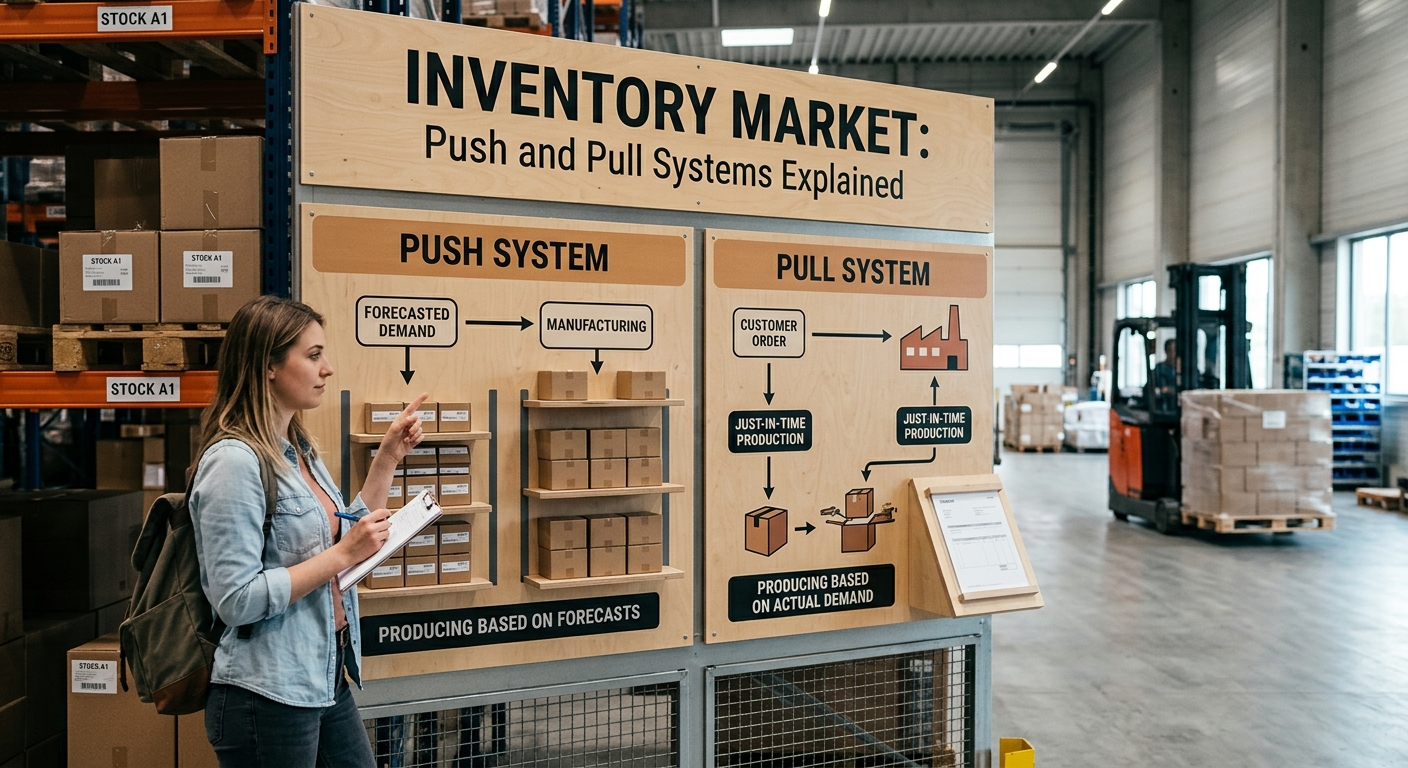
Inventory Market: Push and Pull Systems Explained
Inventory is one of the most visible components of a supply chain, yet managing it effectively is far more intricate than simply counting products on shelves. Every unit represents capital, storage capacity, labor, and a prediction about future demand. When businesses decide how much inventory to purchase, produce, or replenish, they generally rely on one of two broad philosophies: producing or moving goods based on anticipated demand, or responding to actual demand as it occurs. This distinction is commonly expressed through the push or pull system debate. A push system attempts to anticipate what customers will need. A pull system responds to what customers actually need. Neither approach is universally…
-
The Best Performance Indicators for Your Inventory Management
Inventory management is often described as a balancing act. That description is accurate, but incomplete. A company needs enough stock to satisfy customers, maintain production, and protect itself from supply disruptions. At the same time, excessive inventory ties up capital, occupies warehouse space, increases handling requirements, and creates the possibility of obsolescence. The difficulty lies in finding the point where availability and efficiency coexist. This is where measurement becomes indispensable. Without reliable indicators, inventory decisions can become driven by intuition, isolated incidents, or outdated assumptions. With the right metrics, managers can identify inefficiencies, detect emerging problems, compare performance over time, and make more informed decisions. The most useful inventory KPIs…
-
Logistics and Marketing: a love story
Logistics and Marketing were born not only to understand each other, but to enhance each other. And it is that, strange as it may seem, there are still many companies that have not internalized the importance of both departments working hand in hand, in constant communication and cooperation. For those skeptics, we are going to analyze some of the key points in which Logistics and Marketing can excel if they cooperate or fail if they each work on their own. Logistics, Marketing and the ‘Four P’ Marketing schools have been teaching the concept of the Marketing Mix and the Four P’s for decades; that is, four fundamental aspects that marketing…
-
Five moments of truth with your logistics company
In our relationship with companies there are moments that make a difference. Situations in which we value the response that is offered to us and, as it has been, we proceed to form an opinion about that company. The moments, in short, that will mark what we will say to someone who asks us if we recommend that company. What are these moments when we work with a logistics company? What are the thermometers with which we are going to assess if we are in the best hands? 5 moments in which your logistics company should shine Due to the growing importance that logistics is having in companies, its role…
-
logistics functions
Logistics is a multidisciplinary science. It encompasses many activities, very varied departments, different professionals and usually involves several companies throughout its journey. But its diversity does not end here. If we talk about the functions of logistics, what it tries to achieve with its activity, the range continues to expand more and more. To help understand this range of logistics functions we have divided them into activities, tasks and objectives (which we will see in the next article). What are the functions of Logistics Activities Transportation: transportation is the part in which the merchandise, already loaded on the vehicles, transits from its origin to its destination. Although summarized like this…

Let's Live Life Better