-
Top 10 Supply Chain Risks
Logistics risk management is a fundamental task for all those companies that want to avoid upsets in their supply chain. And for your management to be effective, you need to know how to identify your enemies. To help in that task, we compiled the 10 supply chain risks most feared by companies according to a study by the University of Tennessee. Top 10 Supply Chain Risks 1-. Quality The more complex your supply chain is, the more actors are involved in it. And, therefore, it is more difficult to be able to ensure that they maintain the quality standards that you demand over time. In addition, your suppliers have other…
-
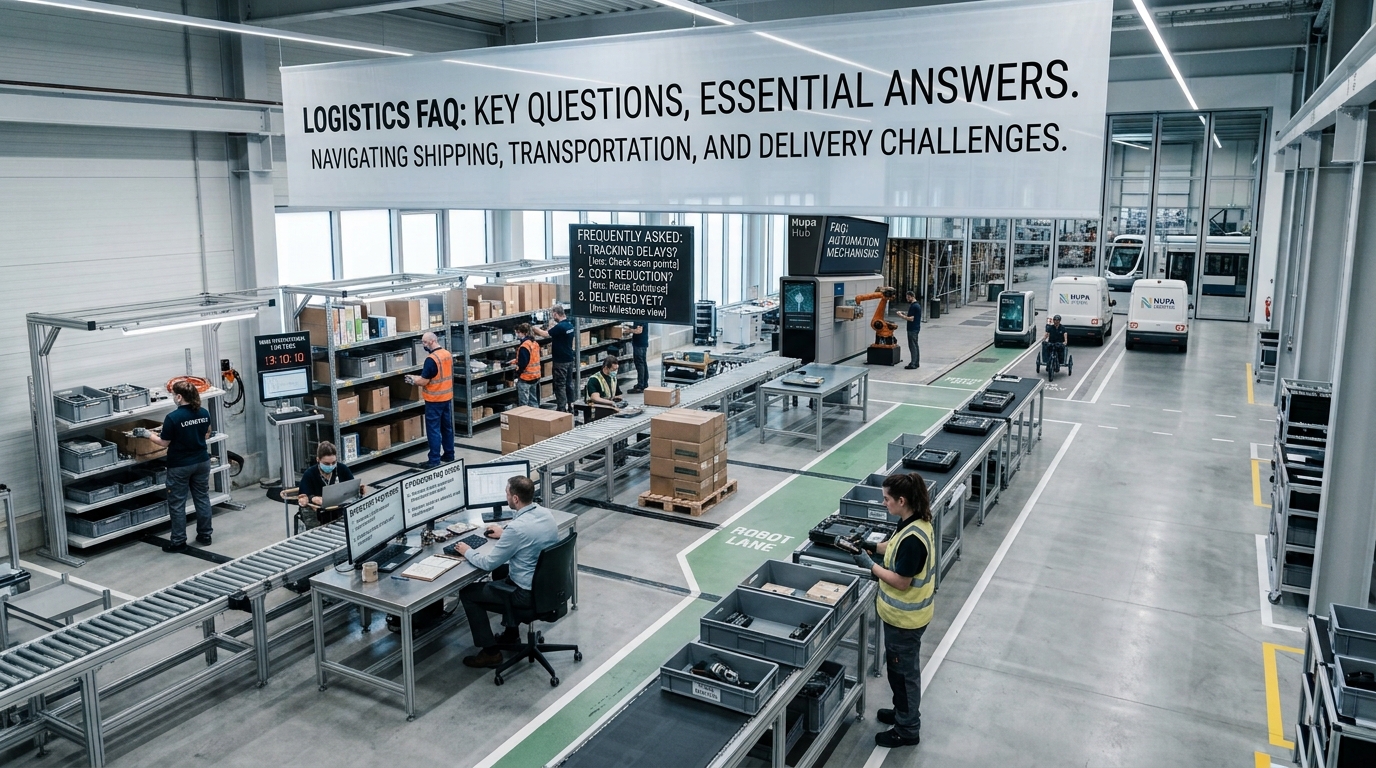
Logistics FAQ: Essential Questions About Shipping, Transportation, and Delivery
Logistics can appear deceptively straightforward. A product leaves a warehouse, travels through a transportation network, and eventually reaches its destination. In practice, however, the journey involves a considerable amount of coordination. Orders must be processed. Shipments need to be scheduled. Carriers require accurate information. Warehouses must prepare goods correctly. Customers expect visibility. Delays need to be investigated, and documentation must remain consistent throughout the process. For businesses and consumers alike, this complexity inevitably creates questions. What exactly does logistics involve? How are shipments tracked? What should be done when a delivery is delayed? Who should be contacted when an order cannot be located? How can logistics costs be reduced? This…
-
Supply logistics, the great unknown
Supply chains are very complex living beings. They are made up of many parts and it is often easy to walk over one of them without paying enough attention to it. Somewhat hidden under the general concept of supply chain is supply logistics, and today we want to give it the space it deserves. So we are going to analyze and explain one of the parts of logistics that has the greatest potential for improvement for companies. What is supply logistics Supply logistics includes all actions aimed at ensuring that our company has a continuous and controlled flow of all the essential materials for its proper functioning. In other words,…
-
10 Don Quixote sayings for logistics
The adventures of Don Quixote de la Mancha make up one of the most widely read books in history and there is no collection of the best works of literature that does not reserve a place of honor for it. However, what lessons could we draw for the supply chain of the 21st century from a work written 400 years ago? As unlikely as it may sound, more than it seems. Guided by his proverbs and together with his squire, Sancho Panza, we immerse ourselves in the popular wisdom of his pages. 10 sayings from Don Quixote to improve your logistics 1.- Praying to God… and giving the mallet This…
-
11 logistics myths that need to be disproved
We live surrounded by myths. That we only use 10% of our brain, that neurons cannot regenerate, that there is one hemisphere of the brain that predominates over the other and that makes us more artistic or more rational, that listening to Mozart makes us more intelligent… And all they are fake. Therefore, it is not surprising that logistics and supply chain myths also exist. If you do not want to fall into them and avoid problems, review the eleven that we have collected in this article. The myths of logistics 1.- We can only improve what we manage, not what we subcontract In this typical idea hides only a…
-
The worst advice for the Supply Chain
People like to hold on to fixed ideas that they can turn to in case of doubt. Theories that, over time, have become clichés and even immovable monoliths. However, the fact that these ideas have caught on does not make them true. What’s more, their aura of infallibility makes them even more dangerous, as we assume them without question, and they are more difficult to extirpate. In the supply chain, these topics often translate into standardized responses. Topics that are intended to be applicable in any situation, without taking into account the specific aspects of each supply chain or its specific needs. The 5 tips on the Supply Chain that…
-
The four “R” of logistics
The need to compete more and better never ends for companies or their logistics. Both need to meet the new needs of their customers and, to do so, these four principles are gaining presence, vital to adapt to current scenarios. These four “R” of logistics, proposed by Donald Waters in ‘Global Logistics’, are: Responsiveness (responsiveness), Reliability (reliability), Resilience (resistance) and Relationships (relationships). The four “R” of logistics Responsiveness (responsiveness) Companies not only have to adapt to new demands, but they have to do it faster and faster. Markets and customers change faster and faster and everything indicates that speed will continue to be a determining factor in the coming years.…
-
How to match demand to supply
The balance between demand and supply is as delicate as it is a critical issue in supply chains. Logisticians around the globe are well aware of the savings that can be achieved by maintaining this balance, and of the disasters that can occur when one of the two is far superior to the other. Last week we saw how we can try to optimize supply to meet demand. In this article we are going to turn the tables and collect some of the methods used to ensure that the demand is the one that adapts to the supply capacity that we have (either by having less supply than we would…
-
What is the Logistics Chain
Logistics Chain or Supply Chain. Where does one begin and where does the other end? We often use them synonymously, although in reality they are not, since their tasks, functions and objectives differ. To help us distinguish them, we are also going to propose some definitions, to help establish their respective fields of action. What is the Logistics Chain “Logistics is about getting the right product to the right customer, in the right amount, in the right condition, in the right place, at the right time, and at the right cost,” as defined by John J. Coyle, professor of logistics. at Penn State University and author of several books on…
-
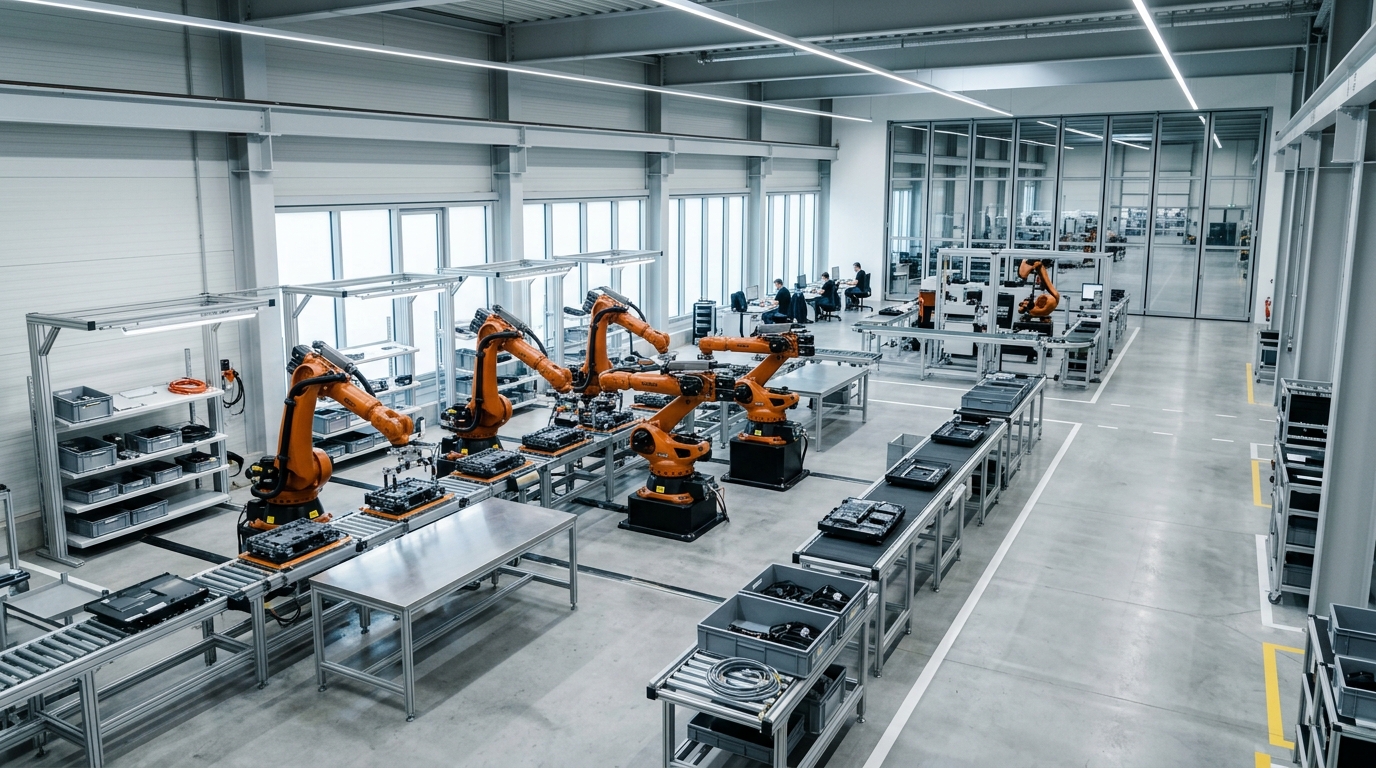
Advantages and challenges of logistics automation
Throughout a supply chain (procurement, manufacturing, distribution, customer service, reverse logistics…) there are a multitude of processes that can be automated. In addition, the promises of automation sound very good in today’s environment, in which the main companies are under increasing pressure to become more efficient and more competitive. But, at what point is logistics automation? This week we are going to analyze what is the status of the update in supply chains, what are the main barriers that companies encounter when betting on it and what are the benefits that can be obtained through logistics automation. Advantages of logistics automation We can divide the advantages of automation into three…

Let's Live Life Better