
How Digital Twins Join Finance and Sustainability
For years, finance and sustainability were often managed as separate business disciplines.
Finance focused on revenue, expenditure, profitability, capital allocation, and financial risk. Sustainability teams concentrated on emissions, energy consumption, resource efficiency, waste, and environmental reporting.
The separation was understandable. The objectives appeared different.
They are no longer as distinct as they once were.
Energy consumption affects operating costs. Material waste affects margins. Carbon-intensive transportation can create financial exposure. Equipment efficiency influences both emissions and maintenance expenditure. Regulatory changes can alter the economics of entire production networks.
This convergence is creating demand for better ways to connect operational information with financial and environmental consequences.
Digital twins are emerging as one of the technologies capable of making that connection more tangible.
A digital twin can represent a physical asset, process, facility, or wider operational system in a digital environment. When connected to real-world data, the model can provide a continuously updated representation of what is happening physically.
The important development is not the visual model itself.
It is the ability to simulate decisions and examine their consequences before they are implemented.
In manufacturing, logistics, construction, energy, and other asset-intensive industries, this creates a bridge between operational performance, financial outcomes, and sustainability objectives.
What Is a Digital Twin?
A digital twin is a digital representation of a physical object or system that is connected to relevant real-world information.
The physical object might be:
- A machine
- A production line
- A warehouse
- A factory
- A vehicle
- An energy system
- A building
- An entire supply chain
The level of sophistication varies considerably.
A basic digital model might provide a static representation of an asset. A more advanced twin can ingest real-time information from sensors, enterprise systems, production equipment, and other data sources.
This allows the digital representation to evolve alongside its physical counterpart.
Consider a manufacturing machine.
Its digital twin might receive information about:
- Operating temperature
- Energy consumption
- Production speed
- Vibration
- Maintenance history
- Output
- Downtime
That information can then be used to understand performance and potentially predict future behavior.
Now introduce financial and environmental data.
The same model can begin to answer more consequential questions.
How much does inefficient operation cost?
How much energy does the machine consume?
What happens to production costs if operating parameters change?
Would replacing the machine reduce emissions enough to justify the investment?
This is where digital twins become strategically interesting.
The Connection Between Finance and Sustainability
Sustainability initiatives are sometimes evaluated primarily through environmental metrics.
For example:
- Tonnes of CO₂ reduced
- Kilowatt-hours saved
- Water consumption reduced
- Waste diverted from landfill
Finance operates with a different vocabulary:
- Return on investment
- Operating expenditure
- Capital expenditure
- Payback period
- Cash flow
- Asset utilization
The difficulty is that both perspectives describe the same physical reality from different angles.
Reducing energy consumption is an environmental action.
It is also a financial action.
Replacing inefficient equipment is a sustainability investment.
It is also a capital-allocation decision.
Reducing material waste can lower environmental impact.
It can simultaneously reduce procurement costs.
Digital twins can provide a common analytical environment in which these dimensions can be evaluated together.
Digital Twins Turn Physical Activity Into Measurable Data
The physical world is difficult to analyze directly.
A factory contains thousands of physical interactions. Machines consume energy, materials move through production lines, workers perform tasks, and products are manufactured at different speeds.
Digital twins translate portions of this complexity into structured digital information.
Sensors can capture physical conditions.
Enterprise systems can provide financial and operational information.
Production systems can contribute manufacturing data.
The digital twin can combine these inputs.
This creates a more comprehensive picture of operational performance.
Instead of saying that a machine “seems inefficient,” decision-makers can investigate its energy consumption, output, downtime, maintenance history, and operating cost.
That distinction matters.
Measurement creates the possibility of optimization.
The Role of Digital Twin Manufacturing
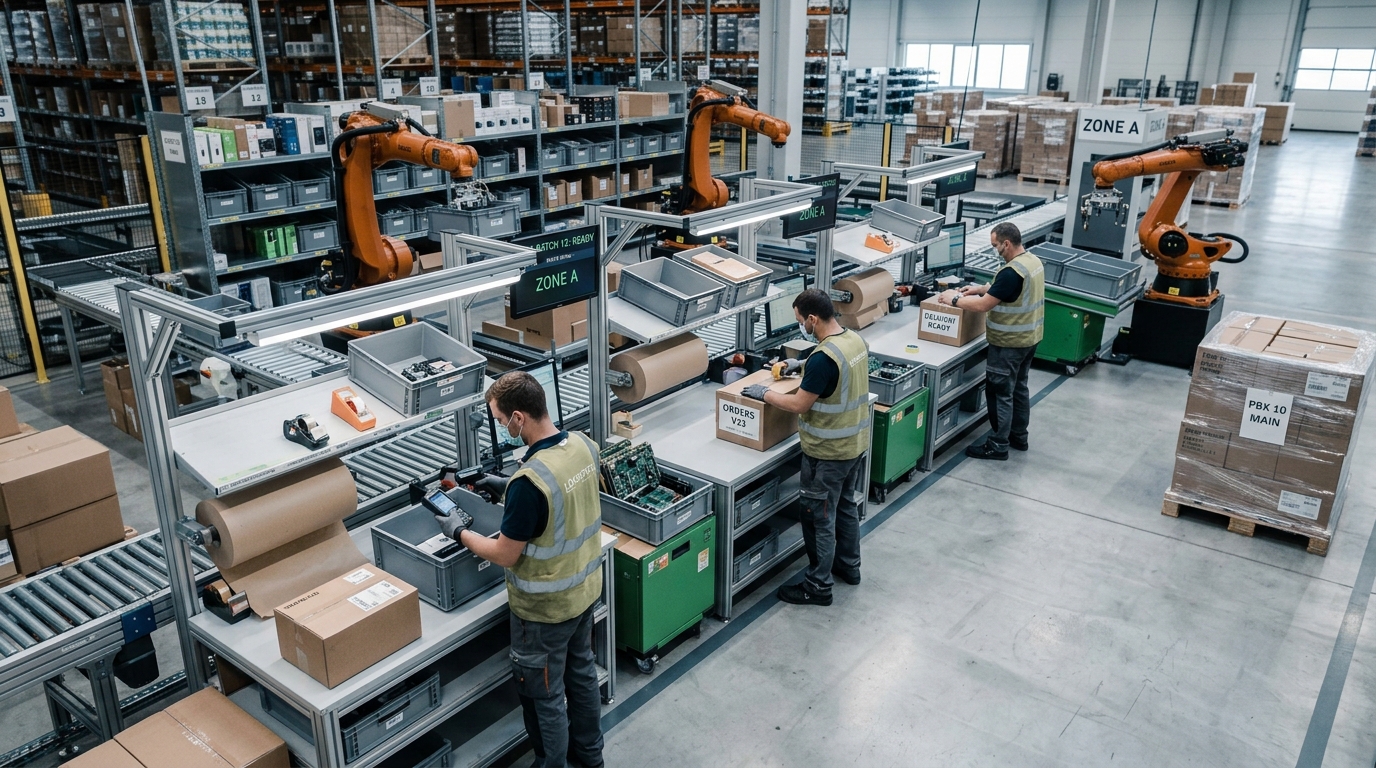
The concept of digital twin manufacturing is particularly relevant because manufacturing operations combine physical assets, energy consumption, material usage, labor, and capital investment.
A manufacturing digital twin can model processes ranging from individual machines to entire production environments.
For example, a factory might use a digital twin to examine:
- Production throughput
- Machine utilization
- Energy consumption
- Maintenance requirements
- Material usage
- Waste generation
- Production bottlenecks
- Product quality
- Operating costs
This information can be analyzed collectively rather than through isolated departmental reports.
Suppose a production line is operating at maximum speed.
At first glance, that might appear desirable.
But the digital twin could reveal that increasing production speed generates more defects, higher energy consumption, and additional maintenance requirements.
The financially optimal operating point may therefore be different from the technically maximum operating point.
That is precisely the kind of trade-off that digital twins can help expose.
From Monitoring to Simulation
One of the most important characteristics of digital twins is their potential to simulate scenarios.
A traditional monitoring system might tell management what is happening.
A digital twin can potentially help explore what could happen.
For example:
What happens if the production temperature is reduced by two degrees?
What happens if machinery operates at a lower speed?
What happens if a high-efficiency motor replaces an older model?
What happens if production is shifted to another facility?
What happens if renewable electricity becomes the primary energy source?
Each scenario can be evaluated against multiple criteria.
That is where finance and sustainability begin to converge.
Calculating the Financial Impact of Sustainability
Sustainability investments can be difficult to evaluate when their benefits are distributed across several categories.
Consider an energy-efficiency project.
The obvious benefit is lower energy consumption.
But there may also be:
- Lower operating costs
- Reduced maintenance
- Longer equipment life
- Lower exposure to energy-price volatility
- Reduced emissions
- Greater regulatory compliance
- Improved asset productivity
A digital twin can help model these variables.
Instead of treating sustainability as an isolated environmental expenditure, the organization can evaluate the investment according to its total economic and environmental impact.
This produces a more sophisticated investment case.
Optimizing Energy Consumption
Energy is one of the clearest areas where financial and sustainability objectives overlap.
Industrial facilities can consume substantial quantities of electricity, gas, steam, and other forms of energy.
A digital twin can model energy use at different stages of an operation.
It may reveal that certain equipment consumes disproportionate amounts of energy relative to its output.
It can also help identify inefficient operating conditions.
For example, two production configurations might produce the same quantity of finished goods but consume different amounts of electricity.
The twin can help compare them.
The result is not simply a reduction in carbon emissions.
It can also be a reduction in operating expenditure.
Predictive Maintenance Has Two Benefits
Equipment failure creates both financial and environmental consequences.
A breakdown can result in:
- Lost production
- Emergency repairs
- Replacement parts
- Overtime
- Delayed deliveries
- Increased waste
Predictive maintenance uses operational data to identify signs of potential failure before catastrophic breakdown occurs.
An industrial digital twin can contribute to this process by representing equipment behavior and incorporating information such as vibration, temperature, pressure, operating cycles, and maintenance history.
The organization can then investigate whether an intervention should occur before the machine reaches a critical failure condition.
Preventing unnecessary failures can simultaneously improve asset economics and reduce waste.
Material Efficiency and Waste Reduction
Materials represent another important intersection between finance and sustainability.
Every kilogram of material that becomes waste represents a potential environmental burden.
It may also represent money that has been spent without producing saleable output.
Digital twins can help manufacturers analyze material flows and identify opportunities to reduce scrap.
A production simulation might compare different configurations and reveal which produces the lowest combination of:
- Material consumption
- Defect rates
- Energy consumption
- Production cost
This is a more comprehensive approach than simply tracking waste after it occurs.
The objective becomes prevention.
Product Design Can Become More Sustainable
Digital twins do not have to begin at the production stage.
They can also influence product design.
Engineers can create digital representations of products and simulate how alternative materials, components, or configurations might perform.
This allows designers to investigate trade-offs before physical prototypes are produced.
For example, a lighter component might reduce material consumption and transportation costs.
A more durable material might increase manufacturing costs but extend product life.
A component designed for easier disassembly might improve end-of-life recyclability.
Digital simulation can help evaluate these competing variables.
Supply Chain Implications
The connection between finance and sustainability extends beyond the factory.
Supply chains involve:
- Suppliers
- Manufacturing facilities
- Warehouses
- Transport networks
- Customers
- Returns
- Energy consumption
- Packaging
A sufficiently sophisticated digital twin can represent parts of this network and simulate different configurations.
For example, a company might compare:
Option A: centralized production with long-distance transportation.
Option B: regional production with higher manufacturing costs but shorter transportation distances.
The cheapest manufacturing model may not produce the lowest total cost once transportation, inventory, carbon exposure, and disruption risk are considered.
Digital twins can help make these trade-offs visible.
Transportation Optimization
Transportation represents another area where financial and environmental objectives often intersect.
Empty vehicle capacity, inefficient routes, unnecessary movements, and poor load planning all create avoidable costs.
They also consume additional fuel or energy.
A digital representation of a logistics network can be used to explore:
- Alternative routes
- Warehouse locations
- Delivery schedules
- Vehicle utilization
- Load consolidation
- Modal shifts
The result can be lower transportation expenditure and lower emissions.
The important point is that these benefits can reinforce one another.
Scenario Planning for Climate Risk
Sustainability is not only about reducing environmental impact.
It is also about preparing for environmental change.
Extreme weather can disrupt:
- Suppliers
- Ports
- Roads
- Warehouses
- Manufacturing facilities
- Energy infrastructure
Digital twins can support scenario planning by modelling the consequences of disruption.
A business might ask:
What happens if a major production facility becomes unavailable for two weeks?
Or:
What happens if transportation capacity through a particular region falls by 40%?
The model can help identify bottlenecks and alternative strategies.
This links climate resilience directly to financial risk management.
Capital Allocation Becomes More Evidence-Based
Executives regularly face competing investment proposals.
Should the organization:
- Upgrade machinery?
- Install renewable-energy infrastructure?
- Expand warehouse capacity?
- Replace a production line?
- Invest in automation?
- Improve insulation?
- Redesign a product?
Each option requires capital.
Digital twins can provide additional evidence by allowing different investments to be evaluated against operational scenarios.
A project might produce:
- Lower emissions
- Lower energy expenditure
- Higher production capacity
- Reduced maintenance
- Improved asset utilization
The ability to quantify multiple consequences makes capital allocation more nuanced.
Connecting Digital Twins With Financial Systems
The greatest potential appears when operational and financial information are integrated.
A digital twin might know that a machine is consuming more electricity.
A financial system can indicate the cost of that electricity.
An enterprise system can provide production volumes.
Together, these datasets can estimate the financial consequence of inefficiency.
This creates a common language.
Operations can discuss physical performance.
Sustainability teams can discuss environmental performance.
Finance can discuss economic performance.
The underlying data can connect all three.
The Importance of Data Quality
Digital twins are only as useful as the information feeding them.
Poor data can create misleading conclusions.
Common problems include:
- Missing sensor readings
- Incorrect equipment specifications
- Outdated asset information
- Inconsistent units
- Duplicate records
- Poor master data
- Incomplete emissions information
Data governance therefore becomes essential.
Before deploying sophisticated simulation capabilities, organizations need confidence in the underlying information.
A beautiful digital model built on unreliable data remains unreliable.
Digital Twins and ESG Reporting
Environmental, social, and governance reporting increasingly requires credible information.
Organizations may need to track environmental performance across operations and supply chains.
Digital twins can potentially contribute by connecting operational activity with environmental measurements.
Instead of estimating energy use from broad assumptions, businesses can increasingly work with granular operational data.
This can improve transparency.
It can also help identify discrepancies between targets and actual performance.
Challenges and Limitations
Digital twins are not without complications.
Developing an effective model can require:
- Significant investment
- Sensor infrastructure
- Data integration
- Specialist expertise
- Software
- Cybersecurity
- Continuous maintenance
There is also the challenge of scope.
Trying to model an entire global supply chain in perfect detail may be unrealistic.
A better approach is often to begin with a high-value use case.
For example:
- Energy optimization
- Predictive maintenance
- Production efficiency
- Warehouse utilization
- Carbon reduction
Once value has been demonstrated, the digital twin can expand.
Cybersecurity Matters
The more connected the digital twin becomes, the more important cybersecurity becomes.
A twin may contain sensitive information about:
- Production capacity
- Equipment
- Energy consumption
- Suppliers
- Operating costs
- Infrastructure
Unauthorized access could expose commercially sensitive information or potentially create operational risks.
Security therefore needs to be considered from the beginning rather than added after implementation.
The Human Factor Remains Important
Digital twins can provide sophisticated analytical capabilities, but they do not eliminate managerial judgment.
A model can estimate consequences.
People still need to determine which objectives matter most.
For example, the financially optimal solution may not always be the most resilient.
The lowest-carbon option may require substantial capital.
The fastest production configuration may increase maintenance requirements.
These are strategic trade-offs.
Digital twins make them more visible.
They do not make them disappear.
A Practical Approach to Implementation
Organizations considering digital twins can follow a staged approach.
1. Select a Specific Problem
Avoid starting with an excessively broad ambition.
Choose a measurable business challenge.
2. Establish the Baseline
Measure current costs, emissions, energy consumption, productivity, or other relevant indicators.
3. Gather Reliable Data
Connect sensors, operational systems, enterprise software, and other relevant sources.
4. Build the Model
Create a digital representation appropriate to the problem.
5. Test Scenarios
Simulate operational and investment alternatives.
6. Measure Outcomes
Evaluate financial, environmental, and operational consequences.
7. Implement the Best Option
Use the findings to inform a real-world decision.
8. Continuously Update
A digital twin should evolve as the physical system changes.
The Strategic Significance of Digital Twins
The greatest value of digital twins may not be simulation itself.
It is the creation of a shared decision-making environment.
Finance can see operational consequences.
Operations can understand financial consequences.
Sustainability teams can quantify environmental consequences.
Executives can compare all three.
This is particularly important because modern business decisions rarely have only one consequence.
A machine replacement affects capital expenditure, energy consumption, maintenance, production capacity, emissions, and potentially product quality.
A digital twin can help bring these dimensions into the same analytical frame.
Final Thoughts
The convergence of finance and sustainability is not a temporary management trend.
It reflects a basic economic reality.
Environmental resources have financial consequences, and financial decisions have environmental consequences.
Energy costs affect margins. Waste affects material efficiency. Carbon regulations can affect capital investment. Climate disruption can affect supply continuity. Equipment efficiency can influence both emissions and profitability.
Digital twins offer a way to model these relationships with greater precision.
Through digital twin manufacturing, companies can connect production performance with energy consumption, material efficiency, asset utilization, and operating costs.
Through an industrial digital twin, organizations can create increasingly detailed representations of complex physical environments and use them to evaluate maintenance, production, energy, and investment decisions.
The most valuable digital twins will therefore not exist simply to replicate machines on a screen.
They will exist to answer difficult questions.
Which investment creates the greatest value?
Which process wastes the most resources?
Which operational change reduces emissions without damaging profitability?
Which asset should be replaced?
Which supply-chain configuration is most resilient?
And what happens if circumstances change?
That is where digital twins become more than a technological novelty.
They become a decision-making instrument.
When finance, operations, and sustainability can evaluate the same physical system through a shared digital representation, the traditional divide between economic performance and environmental performance becomes increasingly difficult to justify.
The result is a more integrated model of business management—one in which profitability, resource efficiency, resilience, and sustainability are not competing afterthoughts, but interconnected variables in the same equation.

You May Also Like

Advantages of freight transport by road

whats foreign exchange trading guide to overseas exchanges