Concumer Finance
-
Incoterms: What Are They and What Are They Used For?
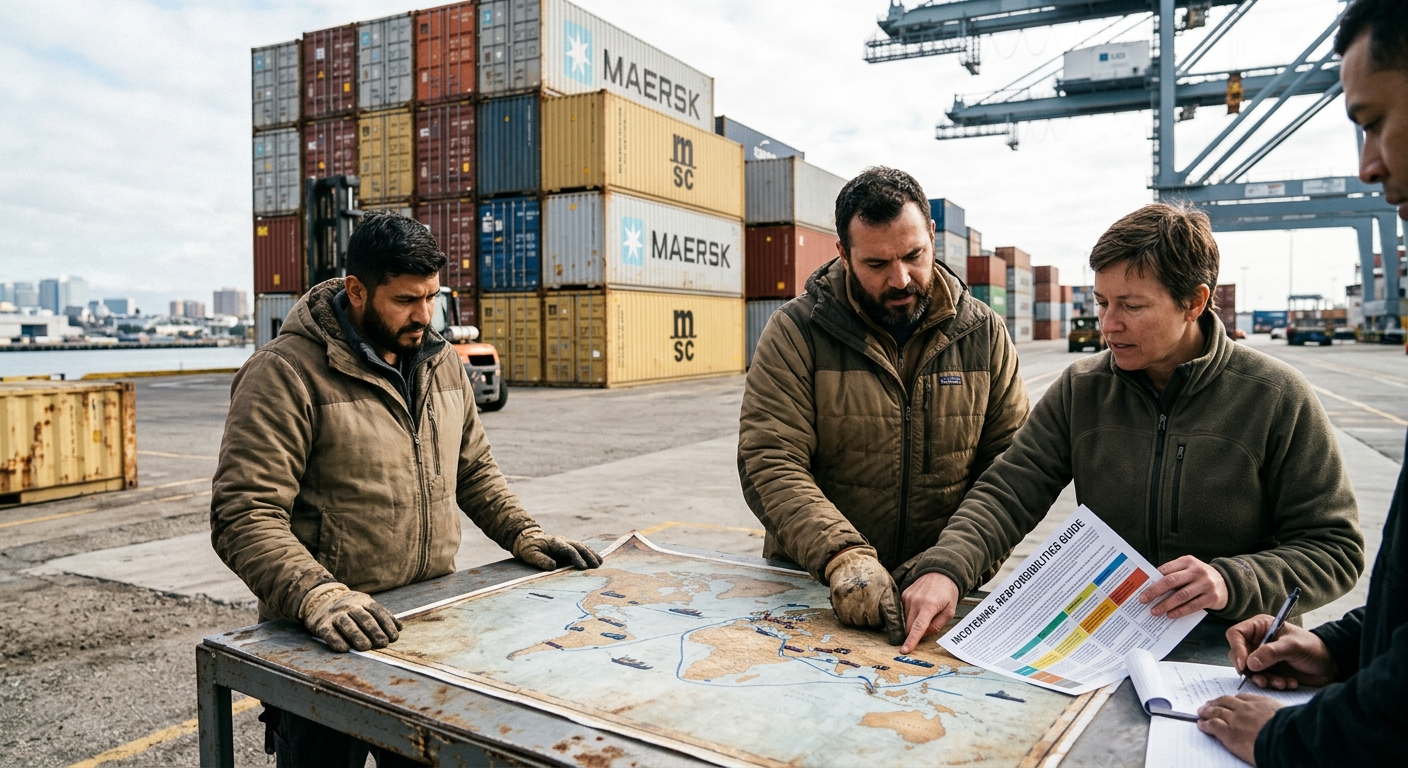
International trade can look deceptively simple from the outside. A seller ships merchandise to a buyer, the buyer receives it, and payment changes hands. Yet between those two events lies a dense web of responsibilities involving transportation, insurance, customs, documentation, loading, unloading, and risk. Who pays for the main carriage? Who arranges export clearance? At what point does the risk of loss transfer from seller to buyer? Who is responsible if goods are damaged during transit? These questions become especially important when a transaction crosses national borders. This is where incoterms enter the picture. Incoterms provide standardized commercial rules that help buyers and sellers understand who is responsible for specific…
-
How to improve your logistics management
When we talk about logistics, images of trucks, packages, warehouses, trailers, delivery notes, orders, indicators, decisions immediately come to mind… A great hodgepodge of things that need to be put in order. And that is where logistics management comes into play, which is what will make the difference in the results that your supply chain achieves. What is logistics management If logistics is the execution of your supply chain processes, logistics management is the act of stopping, raising your head, and coming up with a plan to make your supply chain really work and be efficient. Realizing why we do what we do and what steps we are going to…
-
9 ways in which a logistics operator can help your business grow
Business competition has no end. Every day, companies around the world fight for customer approval in a battle that will start all over again the next morning. And, in order to win, the relationship with your logistics operator is often essential. It is not enough for firms to improve what they did yesterday, but they are forced to reinvent themselves and go further. To open up to new markets and offer new services. That is why we have compiled nine of the aspects in which a logistics operator can help your company to take the step to the next level. How a logistics operator drives companies 1.- It helps you…
-
Logistics 4.0 for Industry 4.0
What is Logistics 4.0? In a world in which the number of acronyms and new terms does not stop growing, there are few that finally remain in time due to their usefulness. If we go by its importance, Logistics 4.0 has many chances to be long-lived, since it will be essential in the latest revolution in the business world: Industry 4.0. Industry 4.0 is the name by which the fourth industrial revolution is known. The first, which began in the 18th century, arose with the application of steam to manufacturing processes. The second, in the 19th century, has electricity and chain production as protagonists; while the third, in the last…
-
Route to Market and logistics: the path to the customer
Be customer oriented. Being with the client. Think of the customer. Put the customer at the center of our business. We have all heard phrases like these countless times. However, how do we reach the customer? What strategies do we follow to put our product in front of the customer and make sure that this place is the right one? The Route to market is in charge of answering this last question; that is, the set of decisions and strategies that we follow to bring our business and our products to the client: distribution channels, geographical areas, forms of commercialization, etc. And, if it is about reaching the customer, it…
-
14 reasons why your competitors outsource logistics and transportation companies
The vast majority of companies have logistics operators who help them totally or partially in their supply chain. However, the decision to hire logistics and transportation companies remains one of the most important for companies. What is it that leads companies to entrust their logistics to third parties? What are your competitors looking for doing it? Logistics and transport companies offer a wide range of services (storage, order preparation, distribution, etc.) to make life easier for their customers. In addition, a good logistics operator will draw up a transition plan for those clients who want to make the leap to outsourcing to do so easily. We are going to review…
-
How is the national transport of merchandise
How is the national transport in Spain? Is there a predominant mode of transportation? How much merchandise moves within our borders? How has the arrival and development of express paleteria distribution networks been in our country? For logistics operators such as Transgesa, it is essential to know the answer to these questions and to know what our national transport is like. Who rules in national transport If there is an undisputed king in national transport, that is the road. The great dominator of logistics in Spain brings together the shipment of more than 80% of the products that are purchased in Spain, relegating maritime transport to second position and far…
-
6 reasons to make the leap to the supply chain in the cloud
Few things have such a direct result in company accounts like the supply chain. Achieving efficient, dynamic and quality logistics improves your numbers and customer satisfaction. That is why companies do not rest in the search to improve this part of their business, and the leap to the supply chain in the cloud wants to be one of the solutions for the future. “Today’s organizations need levels of agility, integration and visibility that are beyond what traditional supply chain systems were designed to provide.” This is explained by a report from Oracle, one of the world giants of technology and cloud services. The study details the six main reasons why…
-
Towards the digital supply chain
Digitization is another of those words that, for a few years, seem to be in fashion in the business world. Like Big Data, Blockchain and other glittering terms that sound very good to the ear. But what are we to do if we want to get serious about digital supply chain beyond the flashy headlines? Companies often lack a clear definition of what this digitization is and limit themselves to a vague concept in which they understand that there will be greater use of computers and technology. Recently, Supply Chain Insights has published a report in which it investigates how 25 large manufacturers approach this process. The digital supply chain…
-
Heijunka or the leveling of production
Lean Manufacturing is one of the great manufacturing models of today and we have already talked about it on several occasions. Today we are going to stop at one of the bricks that usually make up the Lean manufacturing and Just in Time building: the Heijunka. This technique of Japanese origin, which can be translated as production leveling, is created to try to mitigate the effects of variations in demand in the production chain. This leveling refers to a more balanced production among numerous SKUs, instead of dealing with large quantities of the same SKU until moving on to the next, within a usually smaller number of SKUs. Why Heijunka?…