

Singapore Business Change: Understanding a Fast-Moving Business Environment
Singapore has long occupied an unusual position in the global economy. It is geographically small, yet its commercial influence extends far beyond its physical borders. The country functions as a major financial center, logistics hub, technology market, manufacturing base, and gateway to Southeast Asia.
That combination makes Singapore an interesting place to examine when discussing business change.
Companies operating there face an environment shaped by international trade, digitalization, government policy, technological innovation, workforce transformation, and shifting consumer expectations. Change is not an occasional disruption. It is part of the operating landscape.
For businesses in Indonesia and other neighboring markets, Singapore is particularly relevant. The two economies are closely connected through investment, tourism, trade, logistics, finance, and cross-border commerce. Even a seemingly simple commercial transaction can involve questions about currency, addresses, shipping, taxation, payment methods, and regulatory requirements.
Understanding those practical details is therefore just as important as understanding the larger economic picture.
Why Singapore Is a Unique Business Environment
Singapore’s business environment has developed around openness and connectivity.
The country has limited domestic resources, so international commerce has historically played an important role in its economy. Its infrastructure, ports, financial institutions, airports, digital networks, and professional services have helped establish it as a regional business center.
This creates a highly competitive environment.
Companies cannot rely solely on established practices. They need to respond to technological and economic changes relatively quickly.
Several forces are particularly important:
- Digital transformation
- Artificial intelligence
- E-commerce
- Regional trade
- Workforce development
- Sustainability
- Financial technology
- Supply-chain restructuring
- Changing customer expectations
These factors do not operate independently.
A change in technology can alter consumer behavior. Consumer behavior can influence logistics. Logistics can affect operating costs. Cost changes can influence pricing and investment decisions.
Business change is therefore often systemic rather than isolated.
Digital Transformation Is Reshaping Singaporean Companies
Technology has become one of the most visible drivers of organizational change.
Companies that previously depended heavily on physical processes are increasingly adopting cloud platforms, automated workflows, analytics, artificial intelligence, and digital communication tools.
The objective is not simply to appear technologically advanced.
Digitalization can help businesses:
- Reduce administrative workloads
- Analyze customer behavior
- Automate repetitive processes
- Improve inventory visibility
- Accelerate communication
- Reduce operational errors
- Improve decision-making
For smaller companies, digital tools can be particularly transformative because they allow them to access capabilities that previously required substantial infrastructure.
A small business can use cloud accounting instead of maintaining elaborate internal systems. An online retailer can access sophisticated payment infrastructure. A logistics company can monitor shipments digitally.
The barrier between small and large enterprises can consequently become less rigid in certain areas.
Artificial Intelligence and the Changing Workplace
Artificial intelligence is another significant catalyst.
AI can analyze large quantities of information, identify patterns, automate selected tasks, and assist with decision-making.
Businesses can apply these capabilities to areas such as:
- Customer service
- Marketing
- Demand forecasting
- Fraud detection
- Inventory planning
- Recruitment
- Financial analysis
- Logistics
However, technological adoption also changes the nature of work.
Some routine activities may become automated, while demand increases for employees capable of interpreting information, managing technology, solving complex problems, and communicating effectively.
This means business transformation is not simply a question of buying new software.
It is also a question of developing human capabilities.
A technologically sophisticated company with poorly prepared employees may gain little from its investment.
Singapore and Regional Commerce
Singapore’s strategic position makes it particularly important for companies seeking access to Asian markets.
Businesses can use Singapore as a regional base for activities such as:
- Distribution
- Finance
- Procurement
- Marketing
- Regional management
- Technology services
- International trade
Its connectivity with neighboring economies creates opportunities for cross-border business.
Indonesia is especially relevant because of its geographic proximity and enormous domestic market.
Companies operating between the two countries must understand practical differences in currency, regulations, taxation, documentation, business customs, and logistics.
That is where seemingly simple details can become operationally important.
Understanding Currency in Singapore-Indonesia Business
Currency conversion is a basic but important consideration in cross-border commerce.
Businesses working between Singapore and Indonesia may need to convert Singapore dollars into Indonesian rupiah or vice versa.
Searches for 1 singapore dollar to idr are common among travelers, freelancers, importers, exporters, and companies making financial calculations.
However, a currency conversion figure should not automatically be treated as the final amount a business will receive or pay.
Actual transactions can involve:
- Exchange-rate spreads
- Bank fees
- Payment-platform charges
- Transfer fees
- Timing differences
- International transaction costs
Exchange rates also fluctuate.
A business preparing a long-term budget should therefore avoid assuming that today’s exchange rate will remain unchanged throughout an entire commercial period.
For larger transactions, currency risk can become a meaningful financial consideration.
Why Currency Risk Matters to Businesses
Imagine an Indonesian company purchasing goods from a Singaporean supplier.
The supplier invoices the Indonesian company in Singapore dollars.
If the rupiah weakens before payment is made, the Indonesian buyer may need more rupiah to purchase the same amount of Singapore dollars.
The underlying price of the goods has not changed.
The effective cost has.
This illustrates currency risk.
Companies involved in regular international transactions may therefore use various strategies to manage foreign-exchange exposure, including negotiated payment terms, currency matching, budgeting assumptions, and, where appropriate, financial hedging instruments.
The appropriate approach depends on transaction size, risk tolerance, and financial sophistication.
The Importance of Accurate Business Addresses
Cross-border business also depends on surprisingly mundane information.
Addresses matter.
A supplier needs to know where goods should be delivered. A courier needs accurate information to complete a shipment. Government agencies may require registered addresses. Customers need reliable contact information.
Singapore uses a structured postal system, and understanding the singapore postal code format is particularly important when completing shipping forms, online purchases, invoices, and business documentation.
Singapore postal codes generally consist of six digits.
Although entering an address may appear trivial, an incorrect postal code can create delivery complications.
For businesses handling significant shipment volumes, address validation should therefore be part of the operational process rather than an afterthought.
Logistics and the Singapore Business Model
Logistics is one of the clearest examples of how Singapore’s physical infrastructure supports business activity.
A sophisticated logistics environment can help companies move products between suppliers, warehouses, ports, distribution centers, retailers, and customers.
But modern logistics is changing.
Customers increasingly expect:
- Faster delivery
- Real-time tracking
- Accurate delivery windows
- Flexible fulfillment
- Easy returns
Businesses consequently need logistics systems capable of responding to these expectations.
Technology plays a major role.
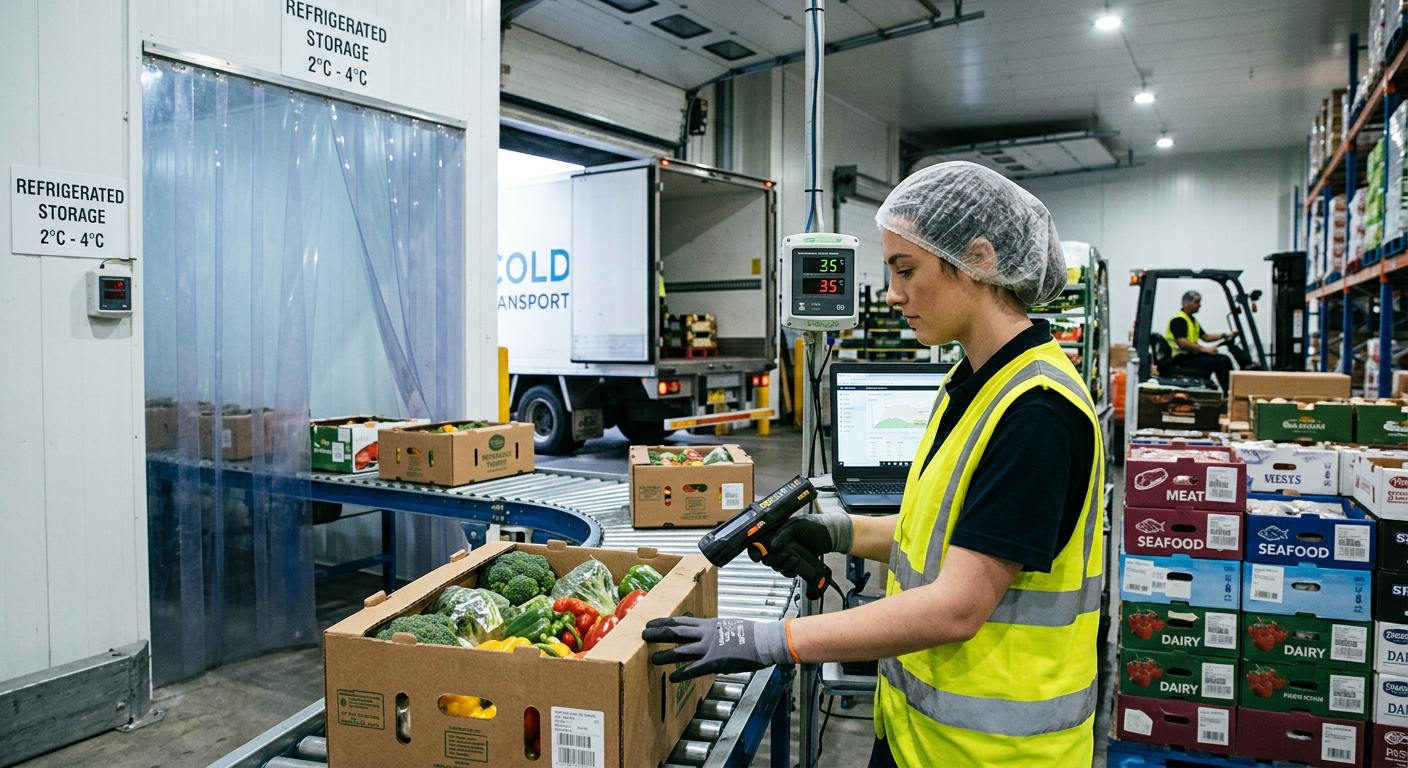
Warehouse management systems, tracking platforms, automated sorting, route optimization, and connected devices can make supply chains more transparent and responsive.
E-Commerce Is Changing Customer Expectations
The rise of e-commerce has altered the relationship between businesses and consumers.
Customers no longer compare only products.
They compare the entire purchasing experience.
That includes:
- Website usability
- Payment convenience
- Delivery speed
- Shipping cost
- Product availability
- Customer service
- Return procedures
A company can have an excellent product but still lose customers because its delivery process is cumbersome.
This creates pressure for traditional businesses to rethink their operations.
Digital commerce is therefore not simply a new sales channel. It can require changes throughout the organization.
Sustainability and Business Change
Environmental considerations are increasingly influencing corporate decisions.
Businesses are under pressure to reduce unnecessary consumption, emissions, packaging, and waste.
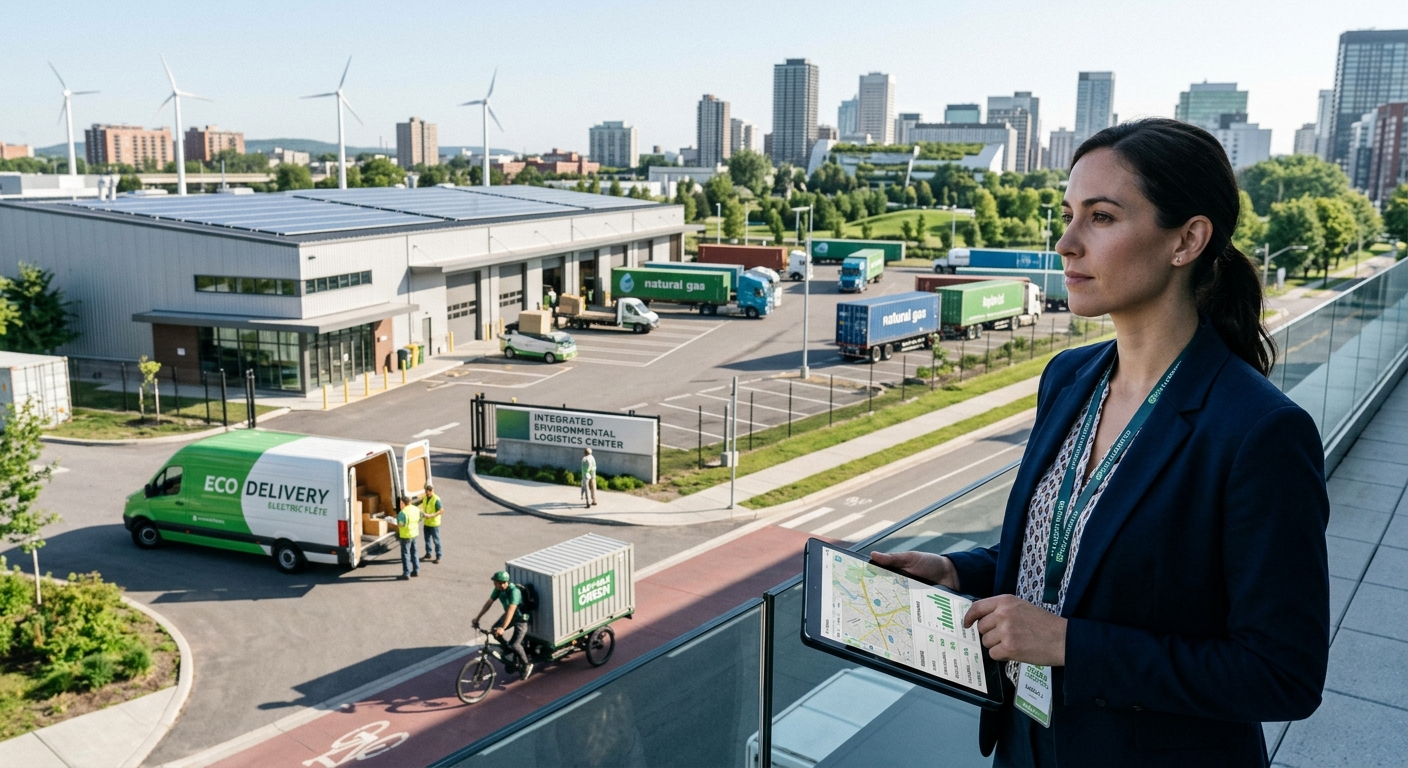
In logistics, sustainability can involve:
- More efficient transportation
- Electric vehicles
- Route optimization
- Consolidated shipments
- Reusable packaging
- Better inventory management
- Reduced empty transport capacity
Sustainability can also become an economic issue.
Reducing waste can lower costs.
Improving transportation efficiency can reduce fuel consumption.
Optimizing inventory can reduce obsolete stock.
Environmental responsibility and operational efficiency are therefore not always opposing objectives.
In many cases, they can reinforce one another.
Workforce Transformation
Technology changes jobs, but demographic and social changes also influence businesses.
Organizations increasingly need employees with combinations of technical and interpersonal skills.
A finance professional may need data literacy.
A marketing specialist may need analytics capabilities.
A logistics manager may need to understand automation.
A business leader may need sufficient technological knowledge to evaluate digital investments.
This creates a growing emphasis on continuous learning.
The old model of learning a profession once and applying the same knowledge for decades is becoming less practical in rapidly changing industries.
Professional development is increasingly an ongoing process.
The Rise of Flexible Business Models
Another consequence of digitalization is greater organizational flexibility.
Businesses can increasingly operate through distributed teams, outsourced services, digital platforms, and specialized external providers.
This can reduce the need to perform every activity internally.
For example, a company might outsource:
- Accounting
- Logistics
- IT infrastructure
- Customer support
- Marketing
- Payroll
- Software development
The advantage is specialization.
The disadvantage is dependency.
Outsourcing can improve efficiency, but it also means businesses need strong vendor management and contingency planning.
A company may become more agile while simultaneously becoming more dependent on its external ecosystem.
Data Has Become a Strategic Asset
Modern businesses generate enormous quantities of information.
Sales transactions, customer interactions, inventory records, website activity, transportation data, and financial information can all contribute to business intelligence.
But data alone has little value if it is inaccurate, fragmented, or inaccessible.
Companies need systems that can turn raw information into useful decisions.
This involves:
- Collecting reliable information.
- Organizing it appropriately.
- Protecting it.
- Analyzing it.
- Applying the resulting insights.
The final step is crucial.
Data should influence decisions.
Otherwise, it becomes digital clutter.
Cybersecurity in a Changing Business Environment
Greater digital dependence also creates greater exposure to cyber risks.
Businesses may store sensitive information about customers, employees, suppliers, and financial transactions.
A cybersecurity incident can therefore have consequences beyond temporary technical disruption.
Potential consequences include:
- Financial losses
- Operational downtime
- Reputation damage
- Regulatory complications
- Loss of customer confidence
Cybersecurity should consequently be treated as part of business continuity rather than merely an IT responsibility.
Employee training is also important.
Sophisticated technology cannot fully compensate for weak passwords, phishing susceptibility, poor access controls, or careless information handling.
The Importance of Regulatory Awareness
Business change often occurs alongside regulatory change.
Companies operating internationally need to understand the rules affecting their activities.
These may concern:
- Corporate structures
- Taxation
- Employment
- Data protection
- Imports and exports
- Financial transactions
- Product standards
- Intellectual property
Regulations can be complex, and requirements vary according to the nature of the business.
Professional legal and accounting advice may therefore be appropriate when entering a new market or restructuring a significant operation.
Ignoring regulatory requirements can transform a promising commercial opportunity into a costly problem.
How Businesses Can Adapt to Change
Successful adaptation does not necessarily mean adopting every new trend.
A more disciplined approach involves several steps.
1. Identify the External Forces
Understand what is changing in the market.
Is customer behavior changing? Are competitors adopting new technology? Are costs increasing? Are regulations evolving?
2. Evaluate the Business Impact
Not every change deserves an immediate response.
Determine which developments could materially affect revenue, costs, customers, or operations.
3. Prioritize
Resources are limited.
Choose initiatives according to potential business value rather than technological novelty.
4. Experiment
Small-scale pilots can provide valuable evidence before large investments are made.
5. Measure Results
Determine whether the change actually improved performance.
6. Scale What Works
Successful experiments can gradually become organizational capabilities.
Singapore’s Business Future
Singapore’s commercial environment is likely to remain shaped by several powerful forces.
Artificial intelligence will continue to influence productivity and decision-making.
Digital financial services will evolve.
Automation will change logistics and manufacturing.
Sustainability will become increasingly relevant to investment and operations.
Cross-border commerce will continue to connect Singapore with neighboring markets.
At the same time, businesses will need to navigate geopolitical uncertainty, cybersecurity risks, changing regulations, and evolving customer expectations.
The result is an environment where adaptability becomes a competitive capability.
Conclusion
Singapore’s business landscape illustrates a broader reality about modern commerce: change is no longer an occasional event that organizations can address after it arrives.
Technology, trade, customer expectations, workforce requirements, sustainability, and regulation are constantly interacting.
For businesses connected to Singapore, even practical details such as 1 singapore dollar to idr exchange rates or the correct singapore postal code can become part of a much larger operational picture when transactions cross borders.
The most resilient companies are not necessarily those that predict the future perfectly.
They are the ones capable of responding intelligently when circumstances change.
That means investing in people as well as technology, improving data quality, strengthening operational processes, monitoring external developments, and maintaining enough organizational flexibility to adjust when necessary.
Singapore’s compact geography may make it small on a map, but its business environment demonstrates how modern economies can become remarkably interconnected.
For companies operating in or around Southeast Asia, understanding that interconnectedness is increasingly essential.
You May Also Like

Why you should improve the security of your warehouse
The Challenges of Environmental Logistics
