Land Transport and Types of Trucks
Land transport is one of the fundamental pillars of modern logistics. Every day, trucks move enormous quantities of raw materials, components, finished products, food, construction materials, machinery, and consumer goods between suppliers, warehouses, distribution centers, businesses, and customers.
Despite its ubiquity, road freight is far more sophisticated than it may initially appear. A truck is not simply a vehicle with a cargo compartment. Different loads require different configurations, capacities, temperature controls, loading mechanisms, security measures, and regulatory considerations.
Choosing the right vehicle can therefore have a direct impact on transportation costs, delivery times, cargo safety, and operational efficiency.
Understanding the type of trucks in logistics is consequently useful for anyone involved in supply-chain management, warehousing, distribution, procurement, or freight transportation.
The central question is not merely which truck is available.
It is which truck is appropriate for the cargo, route, destination, and delivery requirements.
What Is Land Transport?
Land transport refers to the movement of people or goods over terrestrial routes, primarily using roads and railways.
When discussing commercial freight, road transportation is particularly important because trucks can provide remarkable flexibility. Unlike ships and trains, trucks can generally travel directly from a warehouse to a customer’s premises without requiring an additional mode for the final stage.
This characteristic makes road freight especially valuable for:
- Short- and medium-distance deliveries
- Regional distribution
- Last-mile delivery
- Door-to-door transportation
- Time-sensitive shipments
- Distribution between warehouses
- Collection from suppliers
Road transportation can also connect different modes of transport.
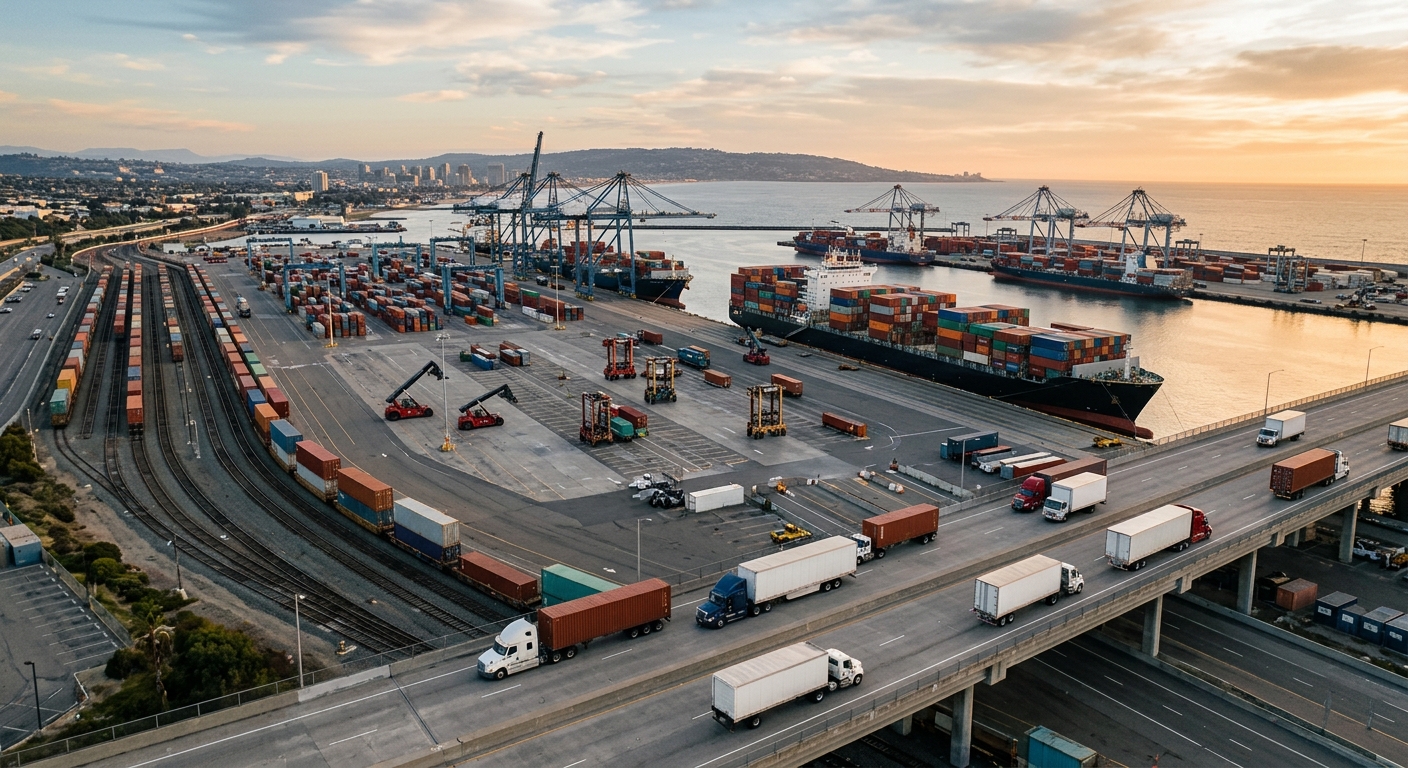
A container might arrive at a seaport by ship, travel by rail to an inland terminal, and then be transferred onto a truck for final delivery.
In this sense, trucks are often the connective tissue of multimodal logistics.
Why Are Trucks So Important in Logistics?
The principal advantage of trucks is flexibility.
A truck can usually access destinations that larger transportation systems cannot reach directly.
A factory may sit several kilometers from a major highway. A retailer may operate in the center of a city. A construction site may be located on a remote road.
The truck can bridge these geographic gaps.
Road transportation also offers considerable scheduling flexibility. Shipments can be organized according to customer requirements rather than being entirely dependent on fixed rail or maritime schedules.
However, flexibility comes with constraints.
Road congestion, fuel prices, driver availability, vehicle capacity, road restrictions, tolls, weather, and maintenance can all influence performance.
Efficient logistics therefore requires careful vehicle selection and route planning.
How to Choose the Right Truck
Before considering specific vehicle categories, it is useful to understand the factors that determine suitability.
A logistics manager typically needs to consider:
Cargo type
What is being transported?
A shipment of frozen food requires radically different equipment from a shipment of steel beams.
Weight
How heavy is the cargo?
The vehicle must have sufficient payload capacity without exceeding applicable legal limits.
Volume
A lightweight but bulky shipment may require a vehicle with considerable cubic capacity rather than exceptional weight capacity.
Dimensions
Oversized cargo may require specialized equipment and route planning.
Temperature
Perishable, frozen, pharmaceutical, and temperature-sensitive goods may require refrigerated or temperature-controlled equipment.
Loading method
Will the cargo be loaded by forklift, crane, conveyor, pump, or another mechanism?
Distance
Local deliveries and international road freight may require different vehicle configurations.
Destination
Urban deliveries can impose restrictions on vehicle dimensions and maneuverability.
Delivery frequency
High-frequency deliveries may favor smaller vehicles, while consolidated freight may be more efficiently moved using larger units.
These variables determine how to transport a particular shipment efficiently.
The Main Types of Trucks in Logistics
There is no single universal classification system for trucks. Terminology and legal categories can vary between countries.
Nevertheless, several broad types are commonly encountered in logistics.
1. Box Trucks
Box trucks have an enclosed cargo body mounted directly on the vehicle chassis.
They are commonly used for transporting packaged goods, furniture, appliances, parcels, and other cargo requiring protection from weather and unauthorized access.
Their enclosed configuration provides several advantages.
Cargo remains sheltered from rain, sunlight, dust, and other environmental factors. The rigid body can also make loading and unloading relatively straightforward.
Box trucks are particularly useful for regional distribution and urban deliveries.
Smaller versions can maneuver through city streets more easily than heavy tractor-trailer combinations.
2. Flatbed Trucks
Flatbed trucks have an open, level cargo platform without permanent side walls or a roof.
This apparently simple design makes them extremely versatile.
Flatbeds are commonly used for:
- Construction materials
- Steel
- Timber
- Industrial equipment
- Machinery
- Pipes
- Oversized components
Their greatest advantage is accessibility.
Cargo can be loaded from the rear, side, or overhead using appropriate equipment.
This is especially valuable when the load is too large or awkward to fit through conventional rear doors.
The absence of an enclosed body does mean that cargo may require additional protection and securement.
Proper load restraint is essential.
3. Curtain-Sider Trucks
Curtain-sider trucks use flexible side curtains that can be moved to expose the cargo area.
They combine some of the accessibility of a flatbed with much of the weather protection associated with an enclosed trailer.
Curtain-siders are particularly useful for palletized freight.
The side opening can allow forklifts to load and unload cargo from locations where rear access would be inconvenient.
They are therefore common in general freight and distribution operations.
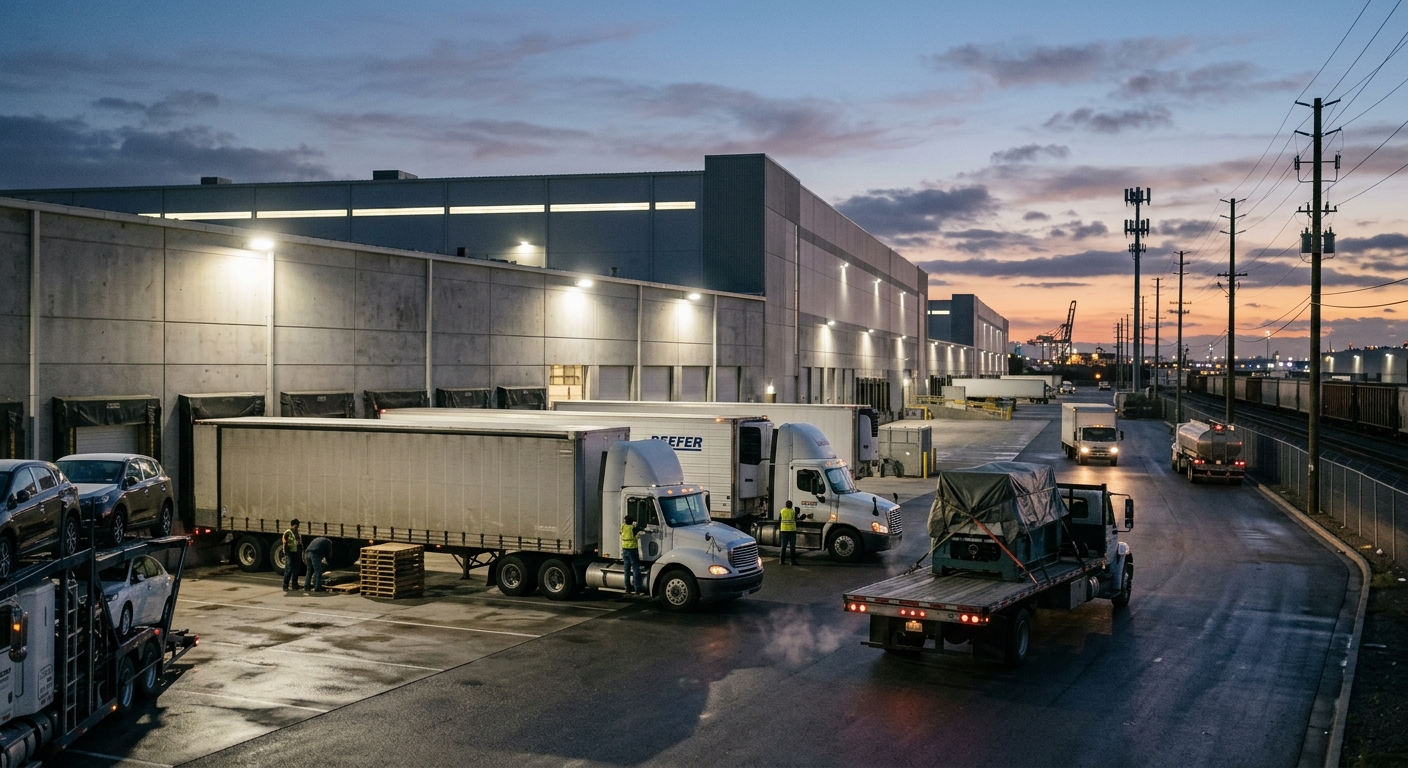
4. Refrigerated Trucks
Refrigerated trucks, often called reefers, are designed to transport goods that must remain within controlled temperature ranges.
Typical cargo includes:
- Frozen food
- Fresh produce
- Meat
- Dairy products
- Certain pharmaceuticals
- Temperature-sensitive chemicals
A refrigeration unit does more than simply make the cargo compartment cold.
The system must maintain appropriate conditions throughout the journey.
Temperature monitoring is therefore an important part of the operation.
For sensitive goods, logistics managers may need to consider the entire cold chain, including loading, storage, transportation, unloading, and final delivery.
A refrigerated truck is only one element of that broader system.
5. Tanker Trucks
Tanker trucks transport liquids, gases, powders, and other materials that can be carried in specialized tanks.
Examples can include:
- Fuel
- Milk
- Chemicals
- Water
- Industrial liquids
- Certain food products
Tankers are highly specialized because the characteristics of the cargo determine the required tank design.
A food-grade tanker, for instance, has different requirements from a vehicle carrying hazardous chemicals.
Safety is particularly important.
Tank design, loading procedures, pressure management, grounding, cleaning, and regulatory compliance may all be critical.
6. Dump Trucks
Dump trucks are primarily associated with construction, mining, excavation, and infrastructure projects.
They feature a hydraulic or mechanical mechanism that allows the cargo body to tilt and discharge its contents.
Typical loads include:
- Sand
- Gravel
- Soil
- Demolition debris
- Aggregate
- Construction materials
The tipping mechanism dramatically reduces unloading time.
However, dump trucks are generally designed for specific bulk materials rather than conventional palletized freight.
7. Car Carrier Trucks
Car carrier trucks are designed to transport vehicles.
Their trailers typically contain multiple levels or specialized platforms that allow several cars to be transported simultaneously.
Vehicle positioning and securing are crucial.
The design must maximize capacity while preventing contact or movement that could damage the vehicles.
Car carriers are commonly used to move newly manufactured vehicles from factories to dealerships, ports, storage facilities, and distribution centers.
8. Livestock Trucks
Livestock trucks are specialized vehicles designed to transport animals.
Their construction must consider ventilation, animal welfare, access, hygiene, and safe movement.
They are used for transporting cattle, pigs, poultry, and other livestock.
Unlike conventional freight, live animals are not passive cargo.
The vehicle and journey must therefore accommodate biological needs as well as transportation requirements.
9. Lowboy and Low-Loader Trailers
Low-loaders are designed for transporting exceptionally heavy or tall machinery.
Their deck sits relatively close to the road surface, reducing the overall height of the load.
This is important because excessive overall height can create problems when passing beneath bridges, overhead structures, or electrical infrastructure.
Typical cargo includes:
- Excavators
- Bulldozers
- Cranes
- Industrial machinery
- Large construction equipment
Route planning is particularly important for these shipments.
A road that is perfectly suitable for an ordinary truck may be unsuitable for an oversized load.
10. Walking-Floor Trucks
Walking-floor trailers use a mechanically operated moving-floor system to unload certain types of bulk material.
They can be useful for transporting materials such as:
- Biomass
- Wood chips
- Agricultural products
- Recycling materials
- Waste
The moving floor allows cargo to be discharged without requiring the entire trailer to tilt.
This can be advantageous in facilities where tipping is impractical or unsafe.
11. Silo Trucks
Silo trucks are specialized for transporting dry bulk materials in enclosed containers.
Potential cargo includes:
- Cement
- Flour
- Grain
- Powdered chemicals
- Industrial materials
Pneumatic systems may be used to load or discharge the material.
The enclosed design protects the cargo and helps prevent contamination.
12. Tow Trucks and Recovery Vehicles
Tow trucks are not generally used for conventional freight distribution, but they occupy an important position within road transportation.
They transport disabled, damaged, or improperly parked vehicles.
Recovery vehicles can also support logistics operations when commercial vehicles experience breakdowns or accidents.
A resilient transportation network must account for such contingencies.
Truck Size and Capacity
Truck classification can also depend on size and weight.
The precise terminology varies between jurisdictions, but logistics operations often distinguish between:
- Light commercial vehicles
- Medium-duty trucks
- Heavy-duty trucks
- Tractor-trailer combinations
Small vehicles are particularly useful for urban distribution.
Large trucks are generally more efficient for moving substantial quantities over longer distances.
The principle is straightforward:
Use enough capacity to move the cargo efficiently without paying for unnecessary capacity.
An oversized vehicle carrying a small load can be economically inefficient.
A small truck overloaded with freight creates an entirely different problem.
Payload Versus Volume
One of the subtler considerations in truck selection is the difference between weight capacity and volume.
Imagine transporting a shipment of pillows.
The goods may occupy a large amount of space while weighing very little.
Now consider transporting steel components.
The steel may reach the vehicle’s maximum legal weight long before the cargo area is physically full.
These are fundamentally different loading problems.
A logistics operator must therefore consider both:
How heavy is the cargo?
and
How much space does it occupy?
Efficient vehicle utilization depends on understanding both dimensions.
How to Transport Different Types of Goods
The question of how to transport goods cannot be answered without considering their characteristics.
General Goods
Packaged consumer products can often be transported in box trucks, curtain-siders, or conventional freight trailers.
Perishables
Food and other temperature-sensitive products may require refrigerated equipment.
Hazardous Materials
Hazardous goods require specialized vehicles, labeling, documentation, driver qualifications, and route considerations.
Oversized Cargo
Large machinery may require flatbeds, low-loaders, escorts, permits, and carefully planned routes.
Liquids
Liquids may require tanker trucks with appropriate specifications.
Fragile Products
Fragile goods require suitable packaging, securement, and handling procedures in addition to an appropriate vehicle.
The vehicle is only part of the equation.
Packaging, loading, securing, routing, handling, and unloading all contribute to cargo safety.
Truck Transporting Goods: What Happens During the Journey?
The process of truck transporting goods generally begins before the vehicle arrives at the loading location.
First, the shipment needs to be planned.
The logistics team determines:
- Cargo characteristics
- Origin
- Destination
- Delivery deadline
- Vehicle requirements
- Weight and dimensions
- Route
- Carrier
- Documentation
The goods are then prepared and loaded.
Load distribution is important. Uneven weight distribution can affect vehicle stability and handling.
Cargo must also be properly secured.
After departure, the shipment may be tracked using GPS or transportation management software.
Upon arrival, the goods are unloaded and the delivery is documented.
This sequence appears routine.
But each stage represents an opportunity for delay, damage, or error.
Load Securing Is Essential
A truck can be perfectly suited to a shipment and still transport it unsafely if the cargo is not secured correctly.
Depending on the cargo, securing methods can include:
- Straps
- Chains
- Blocking
- Bracing
- Load bars
- Dunnage
- Specialized restraints
The purpose is to prevent cargo from shifting during acceleration, braking, turning, or uneven road conditions.
Cargo movement can damage both the goods and the vehicle.
More importantly, improperly secured loads can create serious road-safety hazards.
Load securing should therefore be treated as a fundamental logistics process rather than a final administrative detail.
Urban Logistics and Smaller Trucks
City logistics presents distinctive challenges.
Urban roads can be congested. Parking space may be scarce. Certain streets may impose weight or dimension restrictions.
Large trucks may therefore be inefficient or impractical for the final delivery stage.
Smaller vehicles can provide greater maneuverability.
This has encouraged the development of increasingly sophisticated urban distribution models.
A large truck may transport consolidated freight to a city distribution center, where smaller vehicles then perform individual deliveries.
This creates a two-stage structure:
Long-distance transport → Urban distribution
The model can reduce the number of heavy vehicles entering dense urban areas while preserving transportation efficiency.
Long-Distance Trucking
Long-haul trucking is particularly important for regional, national, and cross-border freight.
Large tractor-trailer combinations can move substantial quantities over considerable distances.
Their efficiency depends on factors such as:
- Vehicle utilization
- Route planning
- Driver scheduling
- Fuel consumption
- Maintenance
- Rest requirements
- Border procedures
- Loading and unloading time
For long-distance operations, reducing empty mileage is especially important.
A truck traveling hundreds of kilometers without cargo represents transportation capacity that generates little or no direct freight value.
Logistics planning therefore seeks to improve backhaul utilization where practical.
Empty Miles and Backhaul
A truck may deliver a shipment to a destination but have no return cargo.
The vehicle still has to return.
This creates an empty movement.
Logistics operators seek to reduce such inefficiencies by identifying backhaul opportunities—additional freight that can be transported on the return journey.
Better coordination between shippers, carriers, and logistics platforms can improve vehicle utilization.
This illustrates an important principle of transportation economics:
The efficiency of a truck depends not only on what it carries, but also on how continuously its capacity can be utilized.
Technology and Modern Trucking
Technology is transforming road freight.
Modern logistics operations may use:
- GPS tracking
- Electronic documentation
- Route optimization
- Fleet-management systems
- Driver communication platforms
- Vehicle telematics
- Fuel-monitoring systems
- Predictive maintenance
- Digital freight marketplaces
These technologies can improve visibility and help reduce inefficiency.
For example, telematics can provide information about fuel consumption, braking behavior, vehicle location, and maintenance requirements.
Route optimization can account for traffic and delivery windows.
Digital documentation can reduce administrative delays.
The truck remains physical.
The management of that truck is increasingly digital.
Sustainability and Road Freight
Trucking is essential to commerce, but it also has environmental implications.
Fuel consumption and emissions are important considerations for logistics operators.
Potential strategies for reducing environmental impact include:
- Better route planning
- Higher vehicle utilization
- Shipment consolidation
- Alternative fuels
- Electric vehicles
- Aerodynamic improvements
- Driver-efficiency programs
- Preventive maintenance
Urban distribution is particularly interesting because smaller electric commercial vehicles are increasingly suitable for certain short-distance delivery applications.
Long-haul transportation presents different technical challenges because payload, range, charging infrastructure, and operating conditions become more demanding.
The transition toward lower-emission road freight is therefore likely to involve several technologies rather than one universal solution.
Choosing the Right Truck Improves Logistics Performance
Vehicle selection can affect almost every aspect of a shipment.
The right truck can:
- Reduce transportation costs
- Protect cargo
- Improve loading efficiency
- Reduce delivery time
- Increase capacity utilization
- Improve fuel efficiency
- Reduce handling
- Support regulatory compliance
The wrong truck can create the opposite effect.
A refrigerated vehicle is unnecessary for non-sensitive dry goods. A small delivery van is unsuitable for extremely heavy industrial equipment. An enclosed vehicle may be inappropriate when overhead loading is essential.
The best vehicle is not necessarily the largest or most technologically sophisticated.
It is the one that corresponds most closely to the operational requirement.
Frequently Asked Questions
What is the most common type of truck in logistics?
There is no single answer because requirements differ between industries. Box trucks, tractor-trailer combinations, curtain-siders, flatbeds, and refrigerated trucks are all widely used for different applications.
Which truck is best for transporting pallets?
Palletized freight is commonly transported using box trailers, curtain-siders, and other enclosed or semi-enclosed freight vehicles equipped for forklift loading.
What truck is used for refrigerated products?
Refrigerated trucks, commonly known as reefers, are designed for temperature-sensitive cargo.
What truck is suitable for heavy machinery?
Flatbeds and low-loaders are frequently used for heavy or oversized machinery, depending on the equipment’s dimensions and weight.
Why are smaller trucks useful in cities?
Smaller trucks generally offer greater maneuverability and can navigate urban environments where larger vehicles may face restrictions.
Conclusion
Land transport remains indispensable because it combines accessibility, flexibility, and relatively direct door-to-door capability.
Trucks are at the center of this system, but there is no universal truck for every shipment. Different cargo requires different equipment, and effective logistics depends on matching vehicle characteristics with the physical and commercial requirements of the load.
Understanding the type of trucks in logistics helps businesses make better decisions about capacity, cost, cargo protection, and delivery performance.
The question of how to transport a product should begin with the product itself: its weight, dimensions, fragility, temperature requirements, handling characteristics, destination, and delivery deadline.
From box trucks and curtain-siders to refrigerated vehicles, tankers, flatbeds, and specialized low-loaders, each configuration exists for a reason.
Ultimately, truck transporting goods is not merely about putting cargo onto a vehicle and driving it to its destination. It is a coordinated process involving planning, vehicle selection, loading, securing, routing, tracking, compliance, and unloading.
The same principle applies to transporting products across virtually every industry.
When the vehicle matches the cargo and the transportation strategy matches the wider logistics network, road freight becomes more than a means of moving goods.
It becomes an important instrument of operational efficiency.