
Logistics Outsourcing: What You Need to Know to Carry It Out Successfully
Logistics is one of the most consequential functions in any organization that moves physical goods. It determines how products travel from suppliers to warehouses, from warehouses to customers, and from one stage of the supply chain to the next.
Yet logistics can also become remarkably complex.
Transportation costs fluctuate. Warehousing requires infrastructure and personnel. Customer expectations continue to accelerate. International shipments introduce regulatory intricacies. Returns create reverse flows. Technology evolves rapidly. Meanwhile, companies are expected to control costs without compromising delivery performance.
Under these circumstances, logistics outsourcing can become a compelling strategic option.
To outsource logistics means transferring some or all logistics activities to an external specialist. Depending on the company’s requirements, this may include transportation, warehousing, inventory management, order fulfillment, packaging, customs administration, last-mile delivery, returns, or even broader supply-chain coordination.
The objective is not simply to hand operational responsibility to another company.
Successful outsourcing requires careful planning, clearly defined responsibilities, reliable data, measurable performance indicators, and a provider capable of aligning its operations with the organization’s commercial objectives.
Done correctly, logistics outsourcing can create greater flexibility, operational efficiency, and scalability. Done carelessly, it can produce hidden costs, communication problems, service degradation, and an uncomfortable loss of operational visibility.
The difference lies in the preparation.
What Is Logistics Outsourcing?
Logistics outsourcing occurs when a business entrusts specific logistics activities to an external service provider rather than performing those activities entirely with internal resources.
The external provider may specialize in one particular function or manage an extensive portion of the supply chain.
Commonly outsourced activities include:
- Transportation
- Warehousing
- Inventory management
- Order preparation
- Packaging
- Freight forwarding
- Customs procedures
- Distribution
- Last-mile delivery
- Returns management
- Shipment tracking
The scope can therefore vary considerably.
A small company might outsource only transportation because it lacks its own fleet. A growing e-commerce company might outsource warehousing and fulfillment. A multinational manufacturer might use a third-party logistics provider to coordinate transportation, storage, inventory, and distribution across several countries.
There is no universal model.
The right degree of outsourcing depends on the organization’s size, products, geography, internal capabilities, customer expectations, and strategic priorities.
Why Do Companies Outsource Logistics?
The decision is usually driven by a combination of economic and operational considerations.
Cost Control
Maintaining an internal logistics operation can require substantial expenditure.
Vehicles, warehouses, handling equipment, software, insurance, labor, maintenance, fuel, and regulatory compliance all contribute to the total cost.
A specialized logistics provider can potentially spread these costs across multiple customers, creating economies of scale.
This does not automatically mean outsourcing will be cheaper in every situation.
The relevant comparison is the total cost of ownership, not simply the price quoted by the logistics provider.
Internal logistics may contain numerous indirect costs that are difficult to identify. Conversely, an outsourcing contract can contain surcharges and additional fees that become significant if the agreement is poorly structured.
A proper financial analysis must therefore examine the entire cost structure.
Access to Specialized Expertise
Logistics is an increasingly specialized discipline.
A competent provider may possess expertise in route optimization, warehouse design, customs compliance, transportation procurement, inventory control, technology integration, and international distribution.
Building that expertise internally can take years.
Outsourcing provides access to an existing operational infrastructure rather than requiring the company to construct everything from the ground up.
This can be particularly valuable when entering unfamiliar markets.
A company expanding into a new country, for example, may lack knowledge of local carriers, regulations, delivery conventions, and warehousing practices. A specialized provider may already possess those capabilities.
Scalability
Demand is rarely perfectly linear.
Seasonal businesses can experience enormous peaks. Promotional campaigns can generate sudden order surges. New products can produce unexpected demand. International expansion can alter transportation requirements almost overnight.
An internal logistics operation designed around average demand may struggle during these periods.
External logistics providers often operate across multiple facilities, carriers, and transportation networks. That broader infrastructure can provide additional flexibility.
A company can therefore scale its logistics capacity without necessarily investing immediately in permanent infrastructure.
This is one of the most attractive reasons to outsource logistics.
Focus on Core Business Activities
Logistics may be essential without being the company’s primary competitive differentiator.
A software company, fashion brand, medical-device manufacturer, or food producer may derive its greatest value from product development, engineering, marketing, sales, or customer relationships.
Managing pallets, carrier contracts, delivery routes, warehouse staffing, and shipping documentation can consume significant managerial attention.
Outsourcing can allow the organization to redirect some of that attention toward activities more closely connected to its strategic identity.
The principle is not “logistics does not matter.”
Quite the opposite.
It matters so much that it may be preferable to entrust it to specialists.
The Different Types of Logistics Providers
Not all logistics providers offer the same scope of service.
Understanding the distinction is essential when selecting a partner.
2PL: Transportation Providers
Second-party logistics providers generally offer a specific logistics function, most commonly transportation.
Examples can include trucking companies, shipping lines, rail operators, and airlines.
They may provide excellent transportation capabilities without managing the broader supply chain.
3PL: Third-Party Logistics Providers
A 3PL typically manages multiple logistics activities on behalf of its customers.
These may include:
- Warehousing
- Transportation
- Order fulfillment
- Inventory management
- Packaging
- Distribution
For many businesses, the 3PL model represents the most practical form of logistics outsourcing.
4PL: Supply-Chain Orchestrators
Fourth-party logistics providers operate at a more strategic level.
Rather than simply performing logistics activities, a 4PL may coordinate multiple logistics providers, technologies, and processes on behalf of the client.
The provider becomes an orchestrator.
This model can be attractive for organizations with highly complex supply chains that require centralized coordination.
What Should Be Outsourced?
The first question should not be “Which logistics company should be selected?”
It should be:
Which logistics activities should be outsourced?
Some functions may be excellent candidates while others may represent strategic capabilities that the company should retain internally.
Begin by mapping the current logistics operation.
Identify:
- Activities performed internally
- Activities already outsourced
- Logistics costs
- Personnel requirements
- Technology systems
- Warehouse capacity
- Transportation requirements
- Performance problems
- Customer expectations
- Regulatory obligations
Then evaluate each function according to strategic importance, complexity, cost, and internal capability.
For example, a company might discover that its warehouse operation is efficient and strategically important while its transportation procurement is fragmented and expensive.
In that scenario, outsourcing transportation could make more sense than outsourcing the entire logistics operation.
Outsourcing should be surgical when appropriate, not indiscriminate.
Choosing the Right Logistics Partner
Provider selection is arguably the most important stage of the entire process.
A logistics company may look impressive during a sales presentation yet perform poorly under real operational pressure.
Due diligence is therefore essential.
Experience
Look for evidence of experience with similar products, volumes, geographies, and customer requirements.
A provider experienced in palletized industrial freight may not be the ideal partner for temperature-sensitive pharmaceuticals.
Likewise, a company optimized for e-commerce parcel fulfillment may not possess the infrastructure required for oversized industrial equipment.
Relevant experience matters more than generic scale.
Infrastructure
Evaluate the provider’s physical and technological capabilities.
Consider:
- Warehouse locations
- Fleet resources
- Carrier network
- Handling equipment
- Security systems
- Warehouse management technology
- Transportation management systems
- Tracking capabilities
Infrastructure should correspond to actual requirements rather than simply appearing impressive.
Financial Stability
A logistics provider is a critical operational dependency.
Financial instability can eventually affect staffing, equipment maintenance, infrastructure investment, and service continuity.
Assess the provider’s financial resilience where appropriate.
Technology Should Be a Core Consideration
Modern logistics is increasingly data-driven.
A provider should be capable of exchanging information reliably with the company’s existing systems.
Potential integration points include:
- ERP systems
- Warehouse management systems
- E-commerce platforms
- Order management systems
- Customer relationship management software
- Transportation management systems
- Inventory systems
Real-time or near-real-time visibility can be particularly valuable.
The company should know where shipments are, whether orders have been processed, how inventory is moving, and whether exceptions have occurred.
A provider that performs excellent physical logistics but offers poor information visibility can still create serious operational friction.
Physical and digital logistics must work together.
Define Service-Level Agreements
A logistics outsourcing relationship should never rely solely on verbal expectations.
Service-level agreements, or SLAs, should establish measurable performance standards.
Potential metrics include:
On-Time Delivery
What percentage of shipments must arrive within the agreed delivery window?
Order Accuracy
How frequently must orders be prepared without picking or shipping errors?
Inventory Accuracy
How closely must system records correspond to physical inventory?
Order Cycle Time
How quickly must orders move from receipt to dispatch?
Damage Rate
What percentage of shipments may arrive damaged?
Response Time
How quickly must the provider respond to operational incidents?
Claims Resolution
How quickly should damaged or disputed shipments be investigated?
The precise KPIs depend on the operation.
The critical principle is measurability.
If performance cannot be measured, accountability becomes nebulous.
Establish Clear Responsibilities
One of the most common causes of outsourcing friction is ambiguity.
Who is responsible for updating inventory?
Who contacts the carrier when a shipment is delayed?
Who handles customer complaints?
Who approves additional transportation costs?
Who manages customs documentation?
Who decides how damaged goods are processed?
These questions should be answered before the operation begins.
A responsibility matrix can be particularly useful.
Each significant process should have an identified owner. This avoids the operational equivalent of a game of pass-the-parcel, in which an issue circulates between organizations because nobody is certain who owns it.
Calculate the True Cost
A logistics provider’s headline price is only one component of the financial equation.
A thorough cost model should consider:
- Transportation fees
- Warehousing fees
- Picking and packing charges
- Storage
- Fuel surcharges
- Handling fees
- Returns
- Administrative charges
- Technology costs
- Customs expenses
- Special handling
- Peak-season charges
- Minimum-volume commitments
Hidden or variable charges can significantly alter the economics.
The comparison should therefore be made against the company’s complete internal cost base.
This may include employee salaries, warehouse rent, utilities, equipment depreciation, maintenance, insurance, software, management time, recruitment, training, and operational overhead.
Only then can the organization determine whether outsourcing creates genuine economic value.
Manage the Transition Carefully
Even an excellent logistics provider can struggle if the transition is poorly managed.
A migration should therefore be treated as a project in its own right.
The transition plan may include:
- Process mapping.
- Data validation.
- System integration.
- Inventory reconciliation.
- Staff coordination.
- Documentation transfer.
- Testing.
- Pilot operations.
- Performance monitoring.
- Full implementation.
A phased transition can be safer than an abrupt switch.
For example, the provider might initially manage one distribution region or product category before assuming responsibility for the entire operation.
This approach allows problems to surface while their operational radius remains limited.
Protect Business Continuity
Outsourcing creates dependency.
That dependency must be managed.
A company should understand what happens if the provider experiences:
- A warehouse outage
- A technology failure
- Labor shortages
- Severe weather
- Cybersecurity incidents
- Carrier disruption
- Financial distress
- Regulatory problems
Business continuity plans should establish alternative arrangements where appropriate.
This might include backup warehouses, alternative carriers, redundant technology systems, emergency communication procedures, or contingency inventory.
Resilience should be designed rather than assumed.
Maintain Visibility After Outsourcing
One common misconception is that outsourcing means relinquishing operational oversight.
It should not.
Management should retain sufficient visibility to understand what is happening across the logistics network.
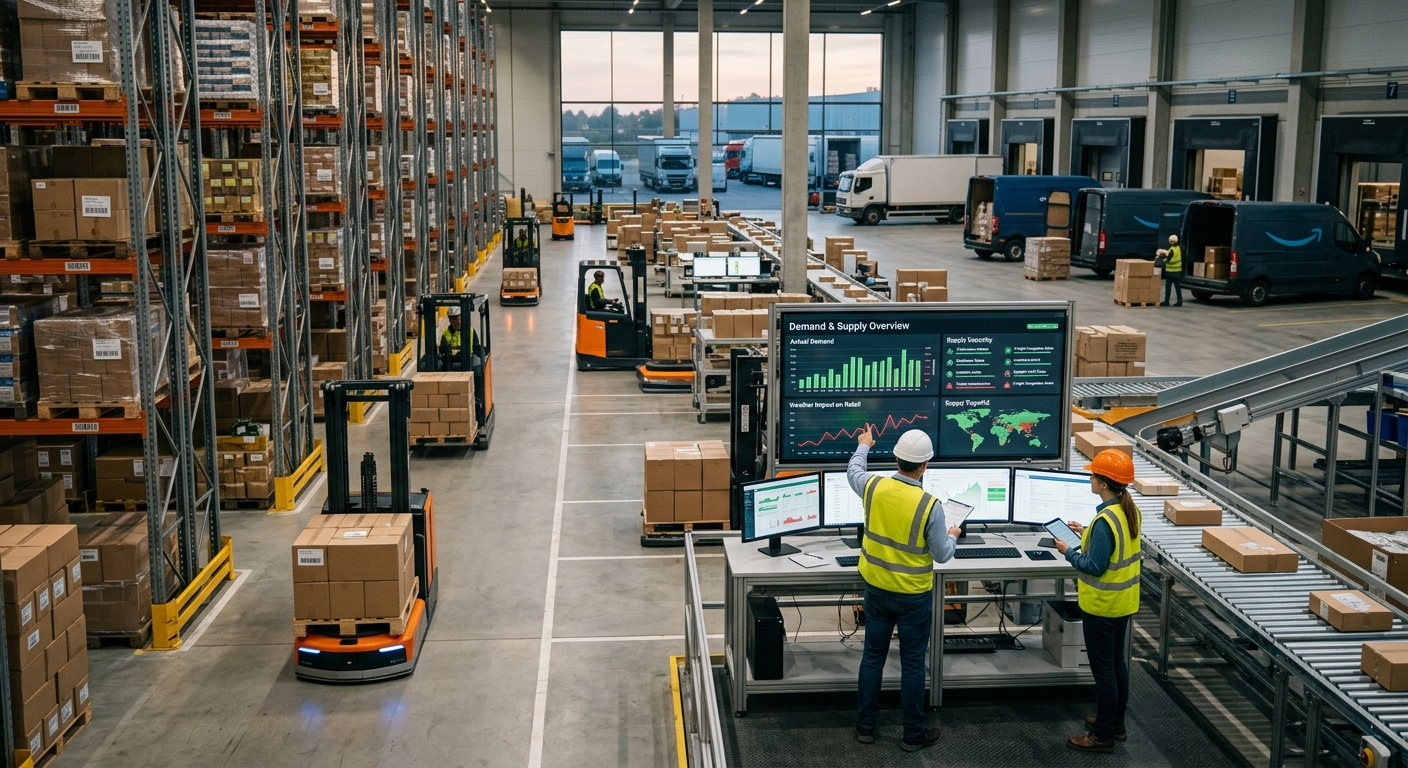
Dashboards and reporting can provide insight into:
- Inventory levels
- Shipment status
- Delivery performance
- Warehouse productivity
- Transportation costs
- Returns
- Exceptions
- Customer complaints
The company does not need to perform every operational task itself.
But it should retain the ability to understand performance and intervene when necessary.
Outsourcing responsibility is not the same as outsourcing accountability.
Communication Is the Hidden Determinant of Success
Technology and contracts matter.
So does communication.
The relationship between a company and its logistics provider should include regular operational reviews and clearly defined escalation channels.
Routine meetings can address:
- Current performance
- Exceptions
- Forecast changes
- Upcoming demand peaks
- Process improvements
- Cost developments
- Technology issues
Strategic reviews can take a longer-term perspective.
Are service levels improving?
Is the provider investing sufficiently in technology?
Are costs evolving appropriately?
Are customer expectations changing?
Is the operating model still suitable?
A logistics relationship should evolve rather than becoming a static contract.
Start With a Pilot
A pilot project can dramatically reduce the risk associated with outsourcing.
Instead of transferring every operation simultaneously, select a manageable scope.
For example:
- One warehouse
- One geographic region
- One product category
- One transportation lane
- A defined group of customers
The pilot should have explicit success criteria.
After the initial period, performance can be assessed against those criteria.
If problems appear, the operating model can be refined before the relationship expands.
This is particularly useful for complex organizations where a full-scale transition would otherwise create substantial operational exposure.
Monitor Performance Continuously
Outsourcing should not be considered complete when the contract is signed.
Performance management is an ongoing discipline.
Regularly review the agreed KPIs and look for trends rather than isolated incidents.
One late shipment may be inconsequential.
A steadily declining on-time delivery rate is not.
Similarly, a single inventory discrepancy may be accidental, while a persistent deterioration in inventory accuracy indicates a systemic problem.
Data provides the evidentiary substrate for these conversations.
It transforms disagreements from subjective impressions into measurable operational discussions.
Encourage Continuous Improvement
A strong logistics provider should not merely maintain the status quo.
It should identify opportunities to improve.
Potential initiatives might include:
- Warehouse layout optimization
- Route consolidation
- Packaging redesign
- Inventory-positioning improvements
- Automated shipment processing
- Carrier optimization
- Returns-process redesign
- Predictive demand analysis
Continuous improvement can generate value long after the initial outsourcing decision.
The best partnerships therefore evolve from a simple supplier relationship into a collaborative operating model.
What Are the Risks of Logistics Outsourcing?
Outsourcing offers significant benefits, but it also introduces risks.
Loss of Control
The company no longer directly manages every operational detail.
This makes transparency and governance especially important.
Dependency
If a provider becomes deeply embedded in the supply chain, switching can become expensive and disruptive.
Service Quality
A provider that fails to meet expectations can negatively affect the customer experience.
Hidden Costs
Poorly structured contracts can produce unexpected fees.
Integration Problems
Incompatible or unreliable technology can create data discrepancies and administrative friction.
Cultural Misalignment
A provider may have different priorities or working practices from the client organization.
These risks do not invalidate outsourcing.
They demonstrate why outsourcing requires governance.
When Is Outsourcing the Right Choice?
Logistics outsourcing may be particularly attractive when:
- Logistics costs are difficult to control.
- Internal infrastructure requires substantial investment.
- Order volumes fluctuate significantly.
- The business is expanding geographically.
- Logistics expertise is limited internally.
- Management wants to focus on core activities.
- Customers require faster or more sophisticated fulfillment.
- Existing logistics systems are outdated.
- The company needs greater scalability.
Conversely, retaining logistics internally may make sense when logistics capabilities constitute a major competitive differentiator or when the organization already possesses exceptionally efficient infrastructure.
The decision should be based on strategic economics rather than fashion.
Conclusion
Logistics outsourcing can provide organizations with access to specialized expertise, infrastructure, technology, scalability, and potentially greater cost efficiency.
But successful outsourcing does not happen simply because a contract has been signed with a logistics provider.
It begins with a clear understanding of what should be outsourced and why.
The organization must assess its current operation, identify appropriate activities, establish financial expectations, select a capable provider, define measurable service levels, integrate technology, protect business continuity, and maintain operational visibility.
Most importantly, the relationship should be treated as a strategic partnership rather than a simple transaction.
To outsource logistics successfully is to transfer operational responsibility without abandoning strategic control.
When expectations are explicit, data is accessible, performance is measurable, and communication remains vigorous, outsourcing can become a powerful mechanism for building a more flexible and resilient supply chain.
The ultimate objective is not merely to make logistics someone else’s responsibility.
It is to make logistics work better.